
Tea blending can be a simple way to create a cup that matches your own taste, but good blending is not the same as putting several aromatic ingredients into one jar and hoping they work together.
A balanced home blend needs a clear tea base, one main flavour direction, ingredients that are dry and suitable for brewing, a repeatable test method and a storage plan that protects the finished mixture from Bangladesh’s humidity and strong kitchen odours.
The most useful rule is simple:
Build the blend around the tea, change one variable at a time, and make a small batch before you make a large one.
For example, a strong black tea can support ginger or cardamom. A green tea may work better with a lighter citrus or floral addition. White tea is easier to overwhelm, while oolong can reward a more restrained fruit or floral direction. A fruit or herbal infusion may contain no Camellia sinensis tea at all, so ingredient identity matters before you call everything “tea.”
The UK Tea & Infusions Association explains that commercial tea blending is used to create a consistent flavour and that flavoured teas may combine real tea with fruit, spices or herbs. That professional context is useful even for a home blender: the goal is not maximum complexity; it is a repeatable cup in which the ingredients make sense together. Read the UK Tea & Infusions Association overview of tea processing and blending.
Quick Summary: How Do You Blend Tea at Home?
Use this seven-step method:
- Choose one main tea base.
- Choose one supporting flavour direction.
- Make a very small trial batch.
- Brew the blend using a consistent water volume and time.
- Taste it plain before adding milk, sugar, lemon or honey.
- Adjust only one ingredient at a time.
- Record the ratio and store the successful blend in a clean, dry, airtight container.
Do not begin with a large jar. A home blend should earn the right to become a bigger batch.
What Is a Tea Blend?
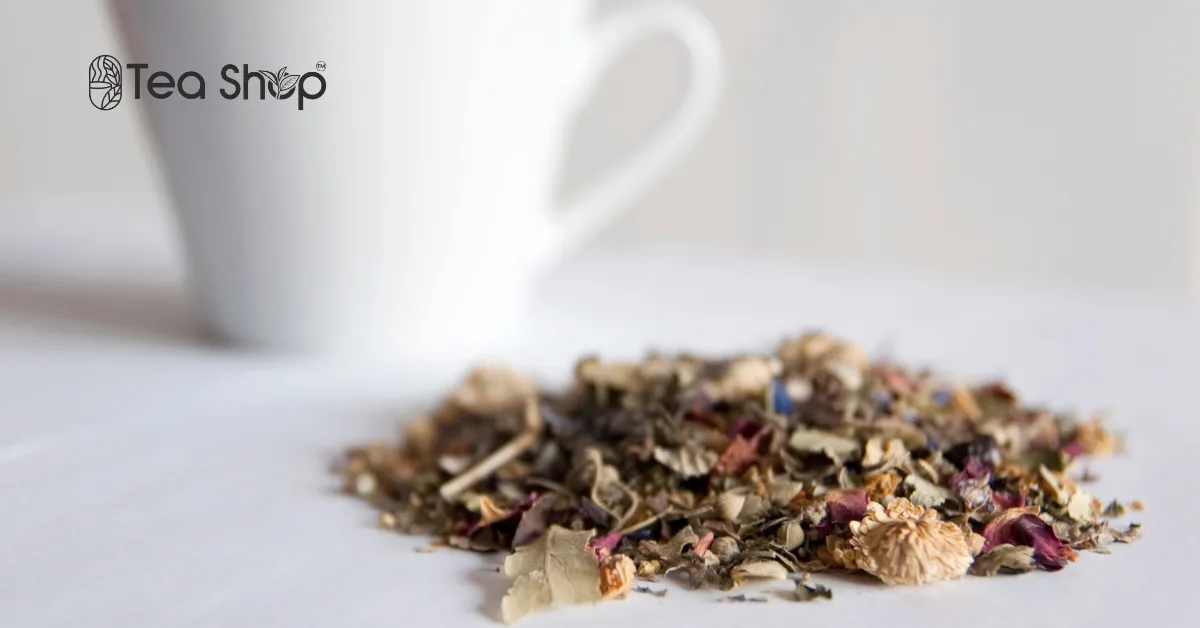
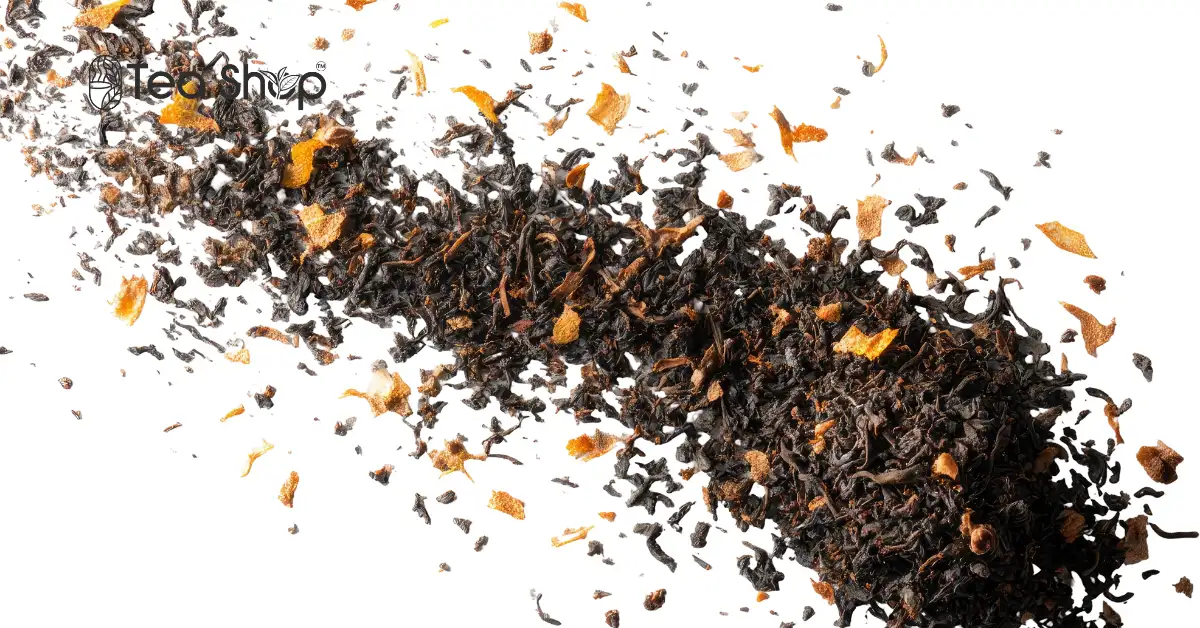
A tea blend is a mixture of two or more ingredients prepared to be infused in water.
It may contain:
- black tea;
- green tea;
- orthodox black tea;
- white tea;
- oolong tea;
- dried fruit;
- dried citrus peel;
- flowers;
- herbs;
- spices;
- or flavouring ingredients.
Tea-Based Blend vs Herbal or Fruit Infusion
A blend containing black, green, white or oolong tea contains leaves from Camellia sinensis.
A herbal or fruit infusion may contain no traditional tea leaf at all. That distinction affects flavour, brewing behaviour and whether caffeine is naturally present.
When you make a home blend, label the ingredients clearly instead of assuming that every botanical infusion behaves like black or green tea.
Start With the Tea Base
The base should make up the main structure of the cup. The supporting ingredient should modify it rather than erase it.
The table below is a practical starting map.
| Tea base | What it can contribute | Supporting directions worth testing | Main risk |
|---|---|---|---|
| CTC black tea | Fast extraction and a bold base | Ginger, cardamom, cinnamon, dried citrus | Too many spices can make the blend one-dimensional |
| Leaf/orthodox black tea | More visible leaf structure and a slower cup | Mild fruit, citrus, light spice, floral accents | Heavy spice can cover the leaf character |
| Green tea | Lighter, fresher tea character | Citrus peel, mild dried fruit, selected flowers or herbs | Strong spice and over-brewing can dominate quickly |
| White tea | Delicate base | Very light floral or fruit accents | The supporting ingredient can overpower the tea |
| Oolong tea | Layered aromatic base | Fruit, citrus, light floral ingredients | Too many additions can hide the reason for choosing oolong |
| Fruit/herbal infusion | Ingredient-led cup | Additional compatible fruit, flowers or herbs | Calling it tea without checking whether it contains tea leaf |
CTC Black Tea as a Base
CTC black tea is useful when you want the tea itself to remain noticeable beside a strong supporting flavour.
A product such as Tea Shop BD Premium Blend Tea can be evaluated as a black-tea base for home experiments where the goal is a fuller cup. Product-specific information should always take priority over assumptions based on the name alone.
CTC black tea can be tested with:
- dried ginger;
- cardamom;
- cinnamon;
- a restrained amount of clove;
- or dried citrus peel.
Because small tea particles extract relatively quickly, do not assume the spice needs a long boil. Brew the tea first in a controlled way and then adjust the recipe.
Leaf and Orthodox Black Tea as a Base
Leaf and orthodox black teas are useful when you want the tea aroma to remain part of the finished blend rather than simply providing strength.
For a visible-leaf option, compare the product information on Tea Shop BD Leaf Orthodox Tea. A larger-leaf base may work well with a restrained citrus, fruit or spice accent, but the correct balance depends on the actual product and how it is brewed.
Green Tea as a Base
Green tea usually benefits from a lighter approach.
Possible directions include:
- dried lemon or orange peel;
- dried apple;
- a small floral accent;
- selected mint-like herbs;
- or mild fruit pieces.
Browse the Tea Shop BD Green Tea collection to compare different green-tea bases before deciding what kind of blend you want to make.
Do not use additions to hide a badly brewed green tea. If the base tea is harsh because the water was too hot or the steep was too long, correct the brewing first.
White Tea as a Base
White tea is easier to overwhelm because a delicate cup can disappear under a strong spice, sweet dried fruit or heavy floral ingredient.
If you want to experiment, begin with the base tea alone and make only a very small trial. The current Tea Shop BD White Tea page gives product-specific brewing guidance that should be followed before you judge whether an added ingredient improves the cup.
Oolong Tea as a Base
Oolong can offer a layered aromatic starting point, so it is usually worth keeping the blend restrained.
Try one supporting direction at a time, such as:
- mild dried fruit;
- citrus peel;
- a light floral note;
- or a gentle spice.
Use the verified brewing information on the Tea Shop BD Oolong Tea page as the starting point for the base tea rather than applying a black-tea method automatically.
Choose One Main Flavour Direction
One of the most common home-blending mistakes is trying to make the first batch taste like everything at once.
Choose a direction before choosing ingredients.
Spiced Black Tea
A strong black-tea base can support one or two spices.
Good test directions include:
- black tea + ginger;
- black tea + cardamom;
- black tea + cinnamon;
- or black tea + ginger + a restrained amount of cardamom.
The tea should still be identifiable after brewing.
Citrus Tea
Citrus peel can be tested with black, green or oolong tea.
Use dried, food-suitable peel rather than wet fresh peel when you are making a blend intended for storage. Fresh ingredients introduce moisture and turn a dry-storage project into a different food-safety problem.
Fruit-Accented Tea
Use only fully dried, clearly identified fruit ingredients intended for food use.
A fruit ingredient can contribute aroma, tartness or sweetness, but large pieces may brew differently from fine tea particles. This is one reason a blend that looks attractive in a jar can brew unevenly in a cup.
Floral Tea Blend
Floral ingredients can become dominant quickly.
Start with a very small amount and test the aroma after brewing rather than judging the ratio only from the dry mixture.
Herbal-Style Blend
If the mixture contains herbs, flowers or fruit but no black, green, white or oolong tea, describe it clearly as a herbal or fruit infusion rather than assuming it has the same characteristics as tea leaf.
A Small-Batch Home Blending Method
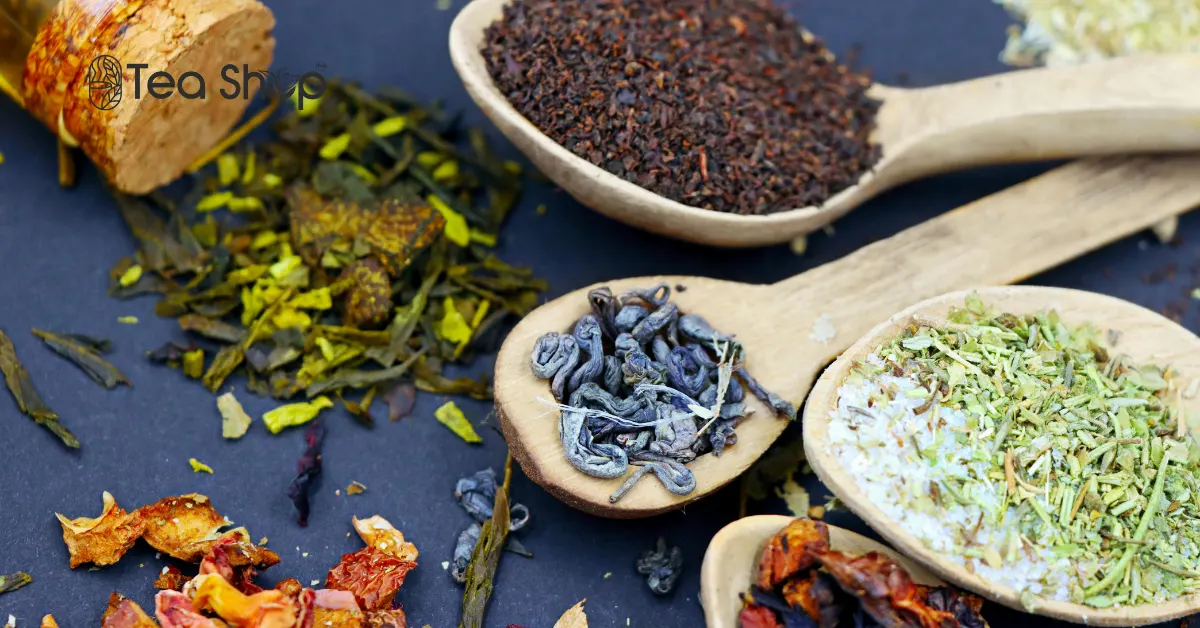
The most reliable home method is not a fixed recipe. It is a controlled experiment.
Step 1: Prepare the Ingredients
Use ingredients that are:
- clearly identified;
- intended for food or infusion use;
- dry;
- clean;
- free from unusual odour;
- and stored properly before blending.
Do not mix a damp ingredient into dry tea.
Step 2: Make a Trial Batch
Prepare enough for only a few cups.
For many home tests, 10–20g total is easier to manage than filling a large storage jar.
A Practical Ratio Ladder
Instead of guessing, use a ladder:
- Make the base tea alone.
- Make a second sample with a very small supporting addition.
- Increase the supporting ingredient slightly only if the first test is too subtle.
- Stop when the supporting flavour is clear but the tea base is still recognisable.
For potent ingredients such as clove or strongly aromatic cinnamon, the correct starting amount may be much smaller than for dried apple or other mild fruit pieces. There is no universal percentage that fits every ingredient.
Step 3: Mix Gently
Combine the dry ingredients in a clean, dry bowl.
Do not crush large tea leaves merely to make the blend look uniform. A visually mixed jar does not need every particle to be the same size.
Step 4: Brew One Controlled Cup
Keep these variables consistent:
- water volume;
- water temperature;
- tea/blend quantity;
- steeping time;
- cup or brewing vessel.
For broad tea-type brewing references, the Tea and Herbal Association of Canada provides starting temperatures and steeping times for white, green, oolong, black and herbal preparations. See its tea brewing guide. Product-specific instructions should still take priority.
Step 5: Taste Plain First
Do not immediately add milk, sugar, lemon or honey.
Taste the blend plain and ask:
- Can I still identify the tea base?
- Is the supporting flavour clear?
- Is one ingredient dominating?
- Does the aroma match the taste?
- Does the finish feel balanced?
If you later want to test additions, the Tea Shop BD guide on how milk, sugar and lemon change tea taste provides a useful separate framework. Keep that serving decision outside the first blending test.
Step 6: Change One Variable
If the spice is too strong, reduce the spice.
If the fruit is invisible, increase the fruit slightly.
Do not simultaneously change tea quantity, brewing time, water temperature and ingredient ratio. You will not know which change caused the improvement.
Step 7: Record the Blend
Write down:
- tea base;
- supporting ingredient;
- weight or repeatable measure;
- water volume;
- water temperature;
- steeping time;
- additions used after brewing;
- tasting notes;
- and whether you would make it again.
A blend that cannot be repeated is only a lucky cup.
A Home Tea-Blending Test Table
Use this worksheet for each trial.
| Test | Base tea | Supporting ingredient | Brew method | Result | Next change |
|---|---|---|---|---|---|
| A | Base only | None | Standard base-tea method | Establish baseline | None |
| B | Same base | Small addition | Same as Test A | Is support noticeable? | Raise or lower support only |
| C | Same base | Adjusted addition | Same as Test A | Is the cup balanced? | Keep or make one final change |
| Final | Successful ratio | Same ingredients | Confirmed method | Repeatable cup | Record recipe |
This process is slower than throwing ingredients into a jar, but it creates far less waste.
Combining Two Tea Bases
You can combine two traditional tea bases, but extraction differences become more important.
Black Tea + Green Tea
This can create a cup with black-tea body and a lighter green-tea contribution.
The challenge is brewing: black tea often tolerates hotter water and longer extraction than many green teas. If the green tea becomes harsh before the black tea develops the way you want, the blend is not yet balanced.
Green Tea + White Tea
This can create a lighter blend, but both bases may be relatively delicate.
Use a gentle brewing method and do not add a strong third ingredient until the two-tea blend works on its own.
Black Tea + Oolong Tea
This can create more depth, but the result depends entirely on the individual products.
Test small batches and decide whether the oolong is adding something you can actually notice.
Oolong + Fruit
Oolong and fruit can work when the fruit supports rather than replaces the aromatic character of the tea.
If the blend tastes mainly of fruit, ask whether you still need oolong as the base.
Working With Fruit Ingredients
Fruit ingredients need extra attention because size, acidity and moisture can vary widely.
Use Dried Ingredients for Dry Stored Blends
Before mixing dried fruit with tea, check whether it is:
- fully dry;
- clean;
- suitable for consumption;
- free from mould or unusual smell;
- and stored in a way that protects it from moisture.
Do not add fresh lemon slices, wet ginger or fresh fruit pieces to a jar of dry tea that you plan to store. Add fresh ingredients at brewing time instead.
Particle Size Changes Brewing
Large fruit pieces and small CTC particles do not extract at the same speed.
If the fruit needs longer contact with water than the tea can tolerate, you have several choices:
- cut the dried fruit smaller if appropriate;
- pre-infuse the fruit separately;
- choose a slower-extracting tea base;
- or accept that the ingredients are better added during brewing rather than stored as one dry blend.
Blending With Spices
Spices are often the easiest ingredients to overuse.
Ginger
Dried ginger can add a sharp, warm note.
Start small with black tea and increase gradually.
Cardamom
Cardamom has a distinctive fragrance. Lightly crushing a pod can release aroma quickly, so do not assume more pods always produce a better cup.
Cinnamon
Cinnamon can contribute a warm aromatic character. A small amount may be enough for several cups depending on the form and intensity.
Clove
Clove is highly assertive compared with many tea leaves.
Treat it as an accent, not as the main bulk of the blend.
Blending With Flowers and Herbs
Flowers and herbs can create attractive blends, but appearance should not replace ingredient knowledge.
Check Identity Before Use
Use only an ingredient you can identify confidently and that is intended for food or infusion use.
Do not gather an unknown flower because it looks similar to a tea ingredient you have seen online.
Keep Claims About Flavour, Not Medicine
Describe a homemade blend by:
- aroma;
- taste;
- colour;
- body;
- ingredient list;
- and brewing experience.
Do not turn a home blending experiment into claims that it cures disease, guarantees weight loss or treats medical conditions.
Label Blends Shared With Other People
If you give a blend to a family member, friend or colleague, list the ingredients clearly.
People may have allergies, sensitivities, medication considerations or personal restrictions that you do not know about.
How to Brew a Homemade Blend
The “correct” method depends on the ingredients in the final mixture.
Use the most sensitive ingredient to define the first test.
If the Blend Contains CTC Black Tea
Watch the extraction time because small particles can become strong quickly.
If the Blend Contains Green or White Tea
Use the base tea’s verified temperature guidance and avoid compensating for a weak fruit ingredient by over-steeping the tea.
If the Blend Contains Large Fruit or Herbal Pieces
The botanical ingredient may need more time than the tea base.
If those requirements conflict, consider brewing the components separately and combining the infusions rather than forcing them into one steeping time.
A Brewing Compatibility Table
| Blend problem | Likely reason | Better next test |
|---|---|---|
| Spice dominates immediately | Supporting ingredient too strong | Reduce spice; keep tea and water unchanged |
| Green tea becomes bitter before fruit shows | Extraction needs do not match | Reduce tea steep time or infuse fruit separately |
| Blend tastes flat | Base is weak or too many ingredients dilute focus | Return to base-only cup and rebuild |
| Aroma is strong but cup tastes weak | Dry aroma is not translating in water | Adjust brewing or ingredient form, not just quantity |
| CTC tea overwhelms delicate flowers | Base extracts too quickly | Lower CTC proportion or choose a slower leaf base |
| Fruit pieces remain flavourless | Pieces may be too large or need longer infusion | Cut suitably or pre-infuse separately |
Storing a Homemade Tea Blend in Bangladesh
A successful blend can still be ruined by careless storage.
Bangladesh’s warm and humid conditions make dry storage especially important.
Use a Clean, Dry, Airtight Container
The jar or pouch should be completely dry before the blend enters it.
Keep the blend away from:
- kitchen steam;
- direct sunlight;
- heat;
- coffee;
- open spices;
- perfume or cleaning products;
- and wet spoons.
Tea Shop BD’s guide to tea freshness and storage in Bangladesh explains the broader storage principles for loose tea in humid conditions.
Label the Container
Write:
- blend name;
- ingredients;
- date prepared;
- suggested brewing method;
- and any note needed to repeat the ratio.
Make Small Batches
Do not assume a homemade blend should sit in storage for months simply because every ingredient was dry when you started.
Make an amount you can use comfortably and watch for changes in:
- aroma;
- texture;
- moisture;
- appearance;
- or unusual odour.
If the mixture becomes damp or develops an abnormal smell or appearance, do not keep brewing it just to avoid waste.
Common Home-Blending Mistakes
Mistake 1: Mixing Too Many Ingredients
A blend with six strong flavours is difficult to diagnose and difficult to repeat.
Better approach
Choose one base and one main supporting direction.
Mistake 2: Adding Moist Ingredients to a Stored Dry Blend
Fresh fruit, wet ginger or damp peel introduces moisture.
Better approach
Keep stored blends dry and add fresh ingredients during brewing.
Mistake 3: Using Too Much Spice
More spice can hide the tea rather than improve it.
Better approach
Start very low and increase gradually.
Mistake 4: Ignoring Particle Size
Fine CTC particles and large fruit pieces may not infuse at the same rate.
Better approach
Design the brew around extraction compatibility, not appearance.
Mistake 5: Changing Several Variables Together
You cannot tell why the new cup is better or worse.
Better approach
Change one ingredient or one brewing variable at a time.
Mistake 6: Not Recording the Recipe
A successful blend becomes impossible to reproduce.
Better approach
Keep a simple blending notebook or digital note.
Mistake 7: Giving a Blend Without an Ingredient List
The recipient does not know what is inside.
Better approach
Label every shared blend clearly.
Mistake 8: Treating Every Botanical Blend as Caffeine-Free
A fruit or herbal-looking mixture may still contain black, green, white or oolong tea.
Better approach
Check every ingredient.
How to Choose Tea Shop BD Bases for Home Blending
The safest commercial role for this article is to help the reader choose a base, not to claim that one product is the universal “best blending tea.”
For a Strong Spiced Base
Start by comparing a verified CTC product such as Premium Blend Tea with the serving style you want.
For a Lighter Base
Browse the Green Tea collection and choose according to the product-specific flavour and brewing information.
For a Visible Leaf Base
Leaf Orthodox Tea can be evaluated when you want the tea leaf itself to remain visually and aromatically important.
For Delicate Experiments
Use the individual White Tea instructions before adding floral or fruit accents.
For Layered Aromatic Experiments
Use the current Oolong Tea brewing guidance as your base method and change the supporting ingredient around it.
If You Are Not Sure Which Base to Choose
Browse the Tea Shop BD online shop and compare tea type, product details, pack size and brewing guidance before buying ingredients for a blending experiment.
Frequently Asked Questions
Can I blend CTC black tea with spices at home?
Yes. A CTC black-tea base can be tested with small amounts of dried ginger, cardamom, cinnamon or another food-suitable spice. Because CTC particles can brew quickly, make a small trial and keep the tea base, water and brewing time consistent while you adjust the spice.
Can I mix green tea and fruit tea?
You can experiment, but check the ingredients first. A fruit blend may contain large pieces that need a longer infusion than green tea can comfortably tolerate. If the extraction times conflict, try infusing the fruit component separately and combining the liquids after brewing.
Is homemade fruit tea always caffeine-free?
No. A blend containing black, green, white or oolong tea naturally contains tea leaf and may contain caffeine. A botanical infusion with no Camellia sinensis is different. Always read or record the complete ingredient list instead of deciding from the word “fruit.”
How much spice should I add to a tea blend?
There is no universal amount because spices differ greatly in intensity and form. Clove, cinnamon, dried ginger and cardamom do not behave identically. Start with a very small quantity, brew a controlled cup and increase only the supporting ingredient if the flavour is too subtle.
Can I blend white tea with flowers?
Yes, if the flower is clearly identified, food-suitable and fully dry. White tea can be delicate, so use a very light hand and test the base tea alone first. The goal is to support the tea rather than replace its character with perfume-like floral intensity.
How long can I store a homemade tea blend?
The source draft does not support one fixed shelf-life for every homemade blend, and a universal number would be misleading. Storage depends on ingredient dryness, packaging, humidity, handling and the stability of every component. Make small batches, keep them airtight and dry, and stop using a blend if its smell, texture or appearance changes abnormally.
Can I add milk to a homemade fruit blend?
It depends on the ingredients. Acidic fruit components can interact poorly with dairy milk and may create separation or an unpleasant texture. Test the blend plain first, then decide whether milk suits the finished infusion rather than assuming every fruit blend should be creamy.
How do I make a home blend for iced tea?
First create a balanced hot-brew version. Then cool it and test over ice. Because melting ice dilutes the drink, you may need to adjust the tea or blend quantity, but do not automatically solve dilution with a very long steep that makes the tea harsh. Change one variable at a time.
Final Thoughts
Home tea blending works best when it is treated as a repeatable tasting experiment rather than a random mixture.
Choose one tea base.
Choose one flavour direction.
Use dry, clearly identified, food-suitable ingredients.
Make a small batch.
Brew it consistently.
Taste it plain.
Change one variable.
Record the result.
Then store the successful blend carefully.
A good blend should taste intentional. You should be able to identify the base, understand what the supporting ingredient contributes and reproduce the cup later without guessing.
That approach is especially useful in Bangladesh, where familiar ingredients such as ginger, cardamom, cinnamon, citrus and dried fruit can create many directions—but humidity and storage conditions make careless large-batch blending a poor idea.