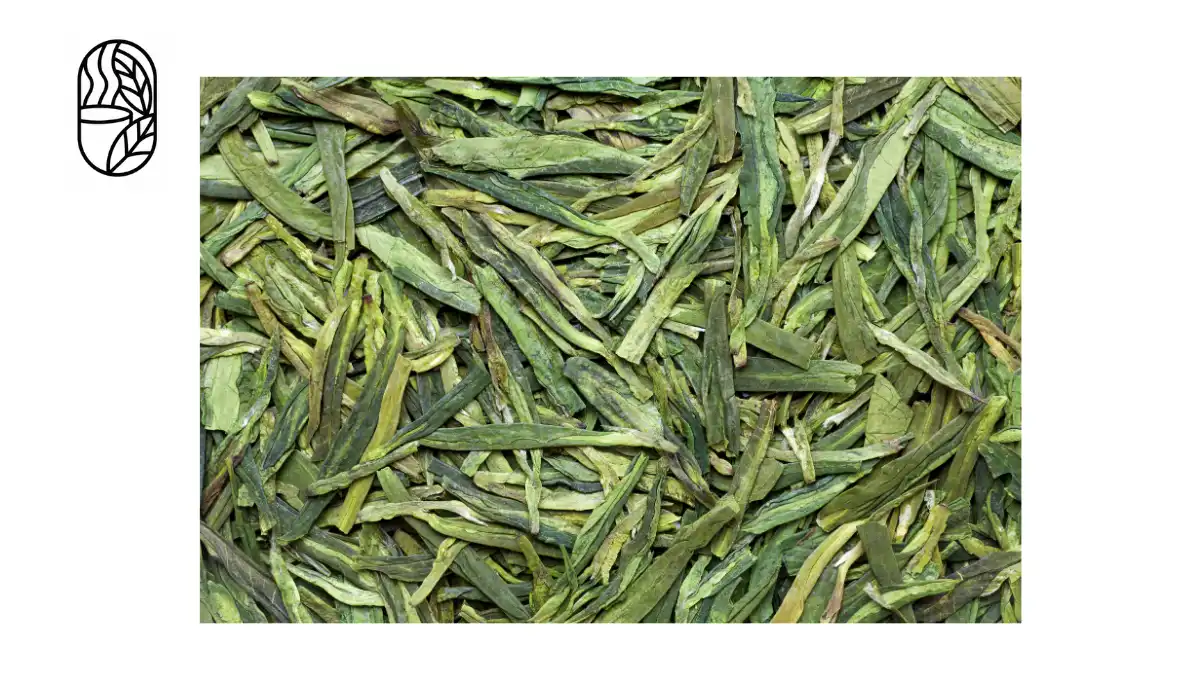

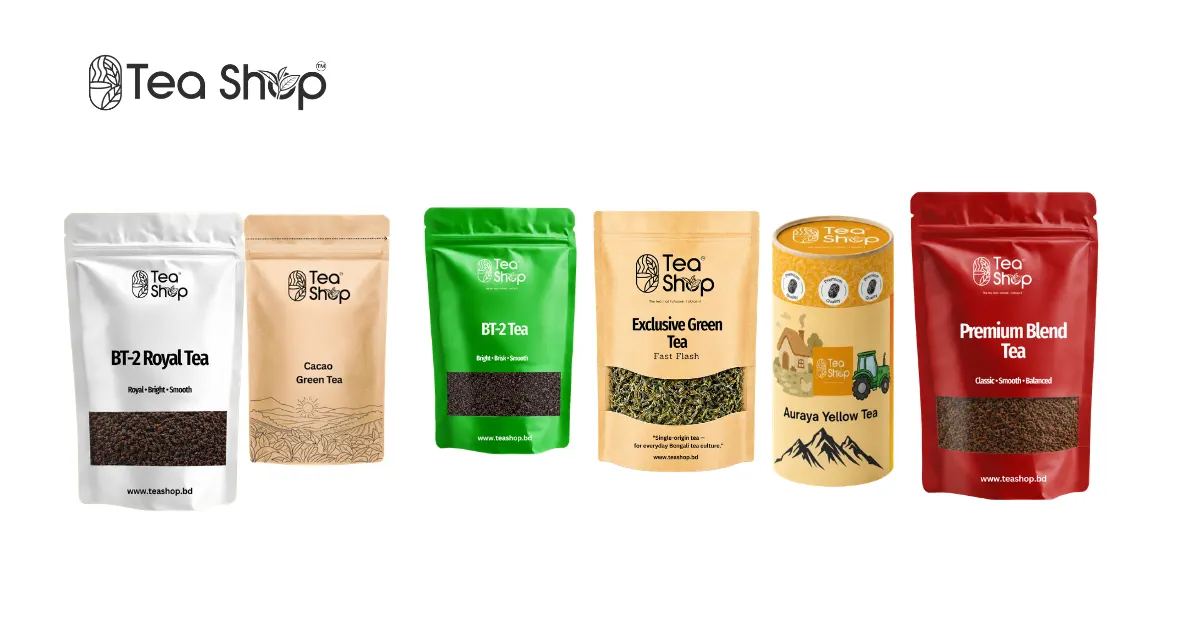
Tea packaging is more than a printed pouch, a colourful box or a premium-looking label. Its main job is to protect processed tea from the environment between packing and brewing.
In Bangladesh, a packet may move through storage rooms, courier hubs, transport vehicles and local delivery routes before it reaches a customer. During that journey, humidity, heat, light, external odours, pressure and rough handling can all affect the product if the barrier or seal is poor.
Good packaging does not turn old tea into fresh tea, and it cannot correct poor processing. It protects tea that has already been properly made, selected and packed by slowing avoidable exposure after processing.
For the after-delivery side of the same topic, Tea Shop BD already has a dedicated guide to tea freshness and storage in Bangladesh. This article focuses on the packaging system itself: barrier, seal, light protection, pack format and delivery protection.
Quick Summary: What Does Tea Packaging Protect Against?
Effective tea packaging is designed to reduce avoidable exposure to:
- Humidity and liquid moisture
- Oxygen and repeated air exposure
- Direct light
- Heat during storage or transport
- External odours
- Dust and contamination from handling
- Crushing, punctures and abrasion
- Rain or courier damage during delivery
The most useful freshness features are not decorative. They are a suitable food-contact barrier, a secure seal, sensible pack size, clear storage guidance and enough outer protection for the delivery route.
Why Tea Needs a Protective Barrier
Processed tea is dry, but it still interacts with its surroundings. Tea can take up moisture and surrounding odours, while oxygen, heat and light can accelerate changes in aroma and other quality characteristics during storage.
A 2023 peer-reviewed review of tea storage identifies heat, moisture, oxygen and light as key environmental factors that can alter tea quality during storage.
Packaging therefore works as a control boundary. It helps manage what enters the packet, what escapes, how much light reaches the leaf and how much physical stress reaches the product before brewing.
The Four Main Packaging Risks
| Risk | What can happen | Packaging response | Buyer action |
|---|---|---|---|
| Moisture | Loss of dry texture, clumping, aroma changes; severe dampness can create a safety concern | Moisture-resistant barrier + intact seal | Keep pack sealed; never use a wet spoon |
| Air / oxygen | Aroma can fade and storage-related oxidation can accelerate | Low-permeability barrier + limited exposure | Reseal immediately after each use |
| Light / heat | Can accelerate quality changes, especially in delicate teas | Opaque/light-protective pack + cool storage | Keep away from windows, hot shelves and vehicles |
| Physical damage | Leaf breakage, punctures or broken seals | Protective outer mailer/box + careful handling | Photograph serious delivery damage before opening |
Moisture Entry
Moisture is one of the most important packaging risks in Bangladesh because humid air and kitchen steam can repeatedly reach an opened pack. Weak seals, open corners, damp storage, wet spoons and poor barrier materials increase the risk.
Fine tea particles may clump when they absorb moisture. More importantly, the product is no longer being stored under the dry conditions for which it was packed.
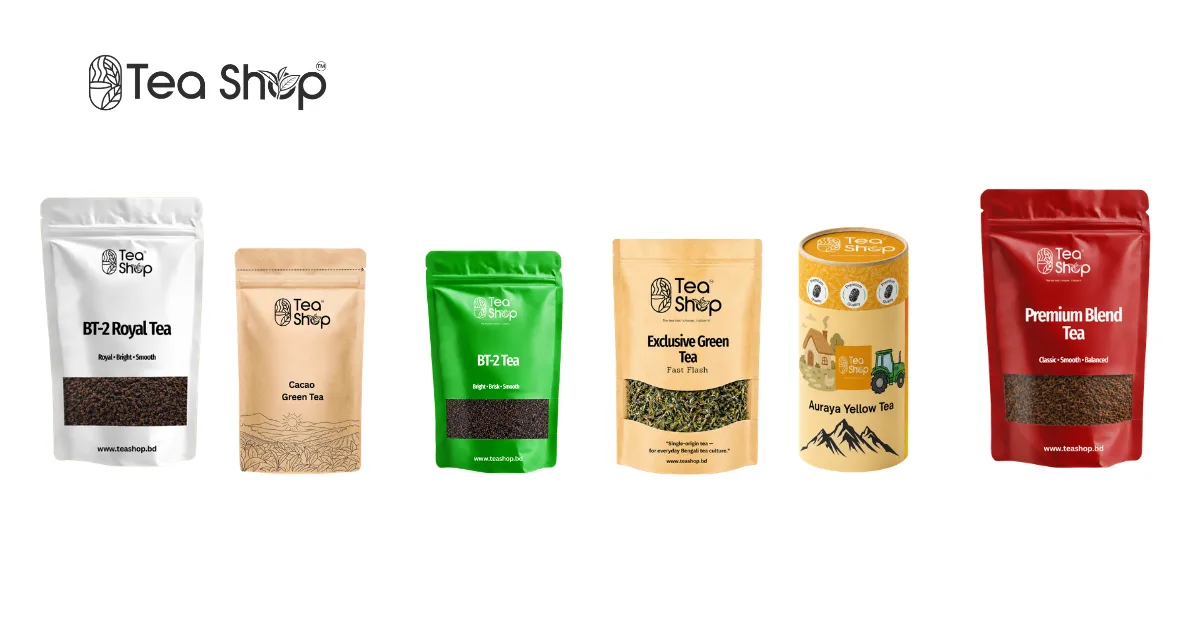
Air and Oxygen Exposure
Every opening replaces some of the protected internal environment with room air. Repeated opening is unavoidable in normal use, but poor resealing makes the exposure much greater.
For large household or office packs, using a small clean “working container” can reduce how often the main supply is opened.
Light and Heat Exposure
Transparent packaging can look attractive, but the leaf should still be protected from direct light and excessive heat. A clear container is safest when it is kept in a dark cupboard and sealed well.
Physical Damage
Loose-leaf and orthodox teas can be crushed during delivery, while punctures can destroy the protective barrier of any tea pack.
Inner Packaging and Outer Packaging Have Different Jobs
Inner Packaging
The inner pouch or container directly encloses the tea. Its primary job is barrier protection:
- Reduce moisture entry
- Reduce uncontrolled air exchange
- Limit aroma loss and odour pickup
- Protect from light when the material is opaque
- Keep the product clean until opening
Outer Packaging
The outer box, carton or courier mailer mainly protects the sealed inner pack during storage and transport from crushing, punctures, rain, dust and rough handling.
Common Tea Packaging Materials: What Each One Actually Does
| Material / format | Main strength | Limitation | Practical use |
|---|---|---|---|
| Paper outer pack | Branding, stiffness, printability | Weak moisture barrier by itself | Best paired with a sealed inner pouch |
| Plastic / polymer pouch | Can provide moisture and air resistance | Performance varies by film and closure | Everyday loose tea and refill formats |
| Foil-laminated pouch | Strong light barrier and potentially low moisture/oxygen permeability | Still depends on seal and laminate specification | Aromatic, delicate or longer-hold teas |
| Tin / metal container | Light protection and rigidity | Lid may not be truly airtight | Reusable outer container; inner pouch can add protection |
| Glass jar | Easy inspection and reusable | Clear glass transmits light | Use in a dark cupboard with a tight lid |
Why “Foil-Laminated” Is Not a Magic Word
A laminate can provide strong barrier performance, but buyers should not assume every silver-looking pouch performs identically. Layer structure, thickness, oxygen and moisture permeability, sealing temperature and closure quality all matter.
A 2024 study on packaged green tea freshness found that lower oxygen permeability, oxygen control and storage temperature materially affected freshness during storage.
Why the Seal Matters More Than the Design
Before use, inspect the package for fully closed edges, no punctures, no torn seams, a functioning zip where provided, and no visible moisture inside.
Packaging Priorities by Tea Type
| Tea style | Main packaging priority | Why it matters | Tea Shop BD reference |
|---|---|---|---|
| Green tea | Air, light, heat and moisture control | Fresh aroma can decline with storage exposure | Green Tea collection |
| CTC black tea | Moisture and odour control; strong seal | Fine particles are used frequently | Premium Blend Tea |
| Orthodox tea | Barrier + physical protection | Larger leaves can break under compression | Orthodox Tea |
| White tea | Odour, light and moisture protection | Delicate aroma can be easily masked | White Tea |
| Oolong tea | Barrier + aroma protection | Aromatic styles benefit from controlled storage | Oolong Tea |
Green Tea
Tea Shop BD’s Green Tea collection contains multiple loose-tea products; check each product page for current pack and storage instructions.
CTC Black Tea
Tea Shop BD’s Premium Blend Tea is one current CTC black tea example where current pack and storage information can be checked.
Orthodox Tea
Tea Shop BD’s Orthodox Tea page currently includes product-specific storage and packaging guidance.
White Tea
The current White Tea page gives product-specific storage and pack details that should take priority over generic advice.
Oolong Tea
Check the current Oolong Tea page for that product’s own storage and pack guidance.
Flower, Herbal and Flavoured Tea
Blends containing flowers, herbs, fruit pieces or flavouring can have different moisture, odour and ingredient-management needs. Packaging should state ingredients clearly and protect the blend from surrounding aromas and humidity.
Packaging During Online Delivery in Bangladesh
Tea stock → packing desk → courier pickup → sorting hub → transport → local delivery → customer
During that route, the parcel may face heat, rain, humidity, vibration, stacking pressure and repeated handling.
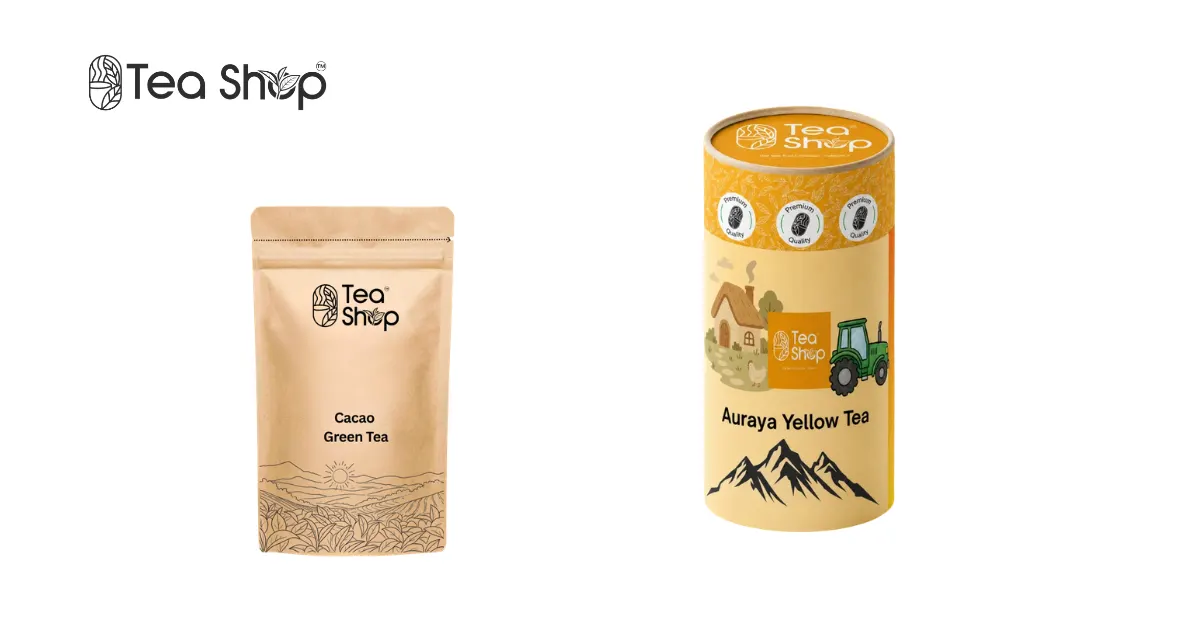
When the Parcel Arrives
Step 1 — Inspect the outer package
Check for heavy crushing, soaking, tears or punctures.
Step 2 — Inspect the inner seal
Look for open corners, punctures, failed seams, contamination or unexplained moisture.
Step 3 — Document serious damage
Photograph serious damage before opening further and contact the seller using the current support channel.
What Should Be Printed or Clearly Stated With a Tea Product?
Useful information includes tea name, category, ingredients, net weight, verified origin where relevant, region only where confirmed, batch information where used, brewing guidance, storage guidance, seller information and best-before/shelf-life information where applicable.
Packaging and Pack Size: Freshness Is Also a Quantity Decision
A larger pack can lower unit cost, but it can also remain open for longer. When you are ready to compare current pack sizes, use the live Tea Shop BD shop because pack options, stock and prices can change.
Packaging Quality Audit for Online Tea Buyers
1. Product information
Can you clearly identify tea type, ingredients, net weight and verified origin information?
2. Inner protection
Does the product use a sealed pouch or container appropriate for dry tea?
3. Resealing after opening
Can the pack be closed securely, or will you need a clean airtight container?
4. Delivery protection
Is the inner pack protected from rain, crushing and puncture?
5. Storage guidance
Does the seller explain how to protect the tea after delivery?
A 30-Second Pass/Fail Check
| Check | Pass | Red flag |
|---|---|---|
| Seal | Edges closed; no holes | Open seam, puncture or leak |
| Moisture | Dry pack and dry contents | Wet pack, condensation or unusual clumping/odour |
| Odour | Normal product aroma | Foreign chemical, cleaning or strong food odour |
| Label | Tea and pack information clear | Missing or contradictory information |
| Outer parcel | Inner pouch protected | Heavy crush, puncture or water damage |
Common Tea Packaging Mistakes
Using Only a Decorative Paper Bag
Appearance is not the same as barrier performance.
Leaving Bulk Tea Open During Packing
Bulk tea should not remain exposed to room air, steam or strong odours unnecessarily.
Storing Tea Beside Strong-Smelling Products
Keep tea away from spices, coffee, perfume and cleaning chemicals.
Using a Wet Scoop or Container
Dry tea should be handled with dry tools.
Reusing an Unclean Jar
Old tea dust, oil, moisture or previous aromas can contaminate the new tea.
Sending Delicate Leaf Without Physical Protection
A barrier pouch can still be crushed or punctured in transit.
Assuming “Airtight” From Appearance Alone
Closure quality matters more than the visual format.
Frequently Asked Questions
Why is airtight or well-sealed packaging important for tea?
A secure package reduces uncontrolled contact with humid air, oxygen and external odours and helps preserve the tea’s dry condition and aroma.
Is foil packaging necessary for every tea?
No. Packaging should match the tea, storage duration and delivery conditions. A well-specified sealed pouch can be suitable for many products.
Does attractive packaging mean the tea is better?
No. Design and tea quality are different issues. Judge the tea by verified product information, condition, freshness, processing, brewing performance and package integrity.
Should tea be transferred to another container after delivery?
Not always. If the original pouch is clean, intact and resealable, continue using it. Otherwise transfer the tea to a clean, dry, odour-free container with a tight lid.
Can damaged packaging affect tea taste?
Yes. Punctures, failed seams or repeated exposure can allow moisture and surrounding odours to reach tea.
How should I protect tea during Bangladesh’s humid season?
Keep the pack closed, dry and away from steam, windows, heat and wet surfaces. Use only dry utensils. For deeper guidance, see Tea Freshness and Storage in Bangladesh.
Does packaging make old tea fresh again?
No. Packaging is preventive; it cannot reverse changes that already occurred.
Where can I compare current Tea Shop BD pack and storage information?
Use the live Tea Shop BD shop and individual product pages.
Final Thoughts
Tea packaging is a protection system, not decoration. The inner package controls exposure to moisture, air, light and odours. The outer package protects the sealed tea against handling and delivery damage. The seal keeps the barrier working, while the label tells the buyer how to use and store the product correctly.
For current products and pack options, browse Tea Shop BD. For after-opening care, continue with Tea Freshness and Storage in Bangladesh.