
Tea Grade Is a Description, Not a Universal Quality Score
When two tea packets look different, the grade name can make one seem automatically superior.
One product may show BOP. Another may mention BP, PF, PD, fannings, dust, FOP or another leaf-grade abbreviation. Some teas are sold more simply as CTC Black Tea, Leaf Black Tea or Orthodox Tea.
That creates understandable questions for Bangladesh buyers:
- Does a larger leaf always mean better tea?
- Is dust automatically the lowest-quality tea?
- Why can one grade cost more than another?
- Which grade works best for dudh cha?
- Does a grade name tell me how the tea will taste?
The most important answer is this:
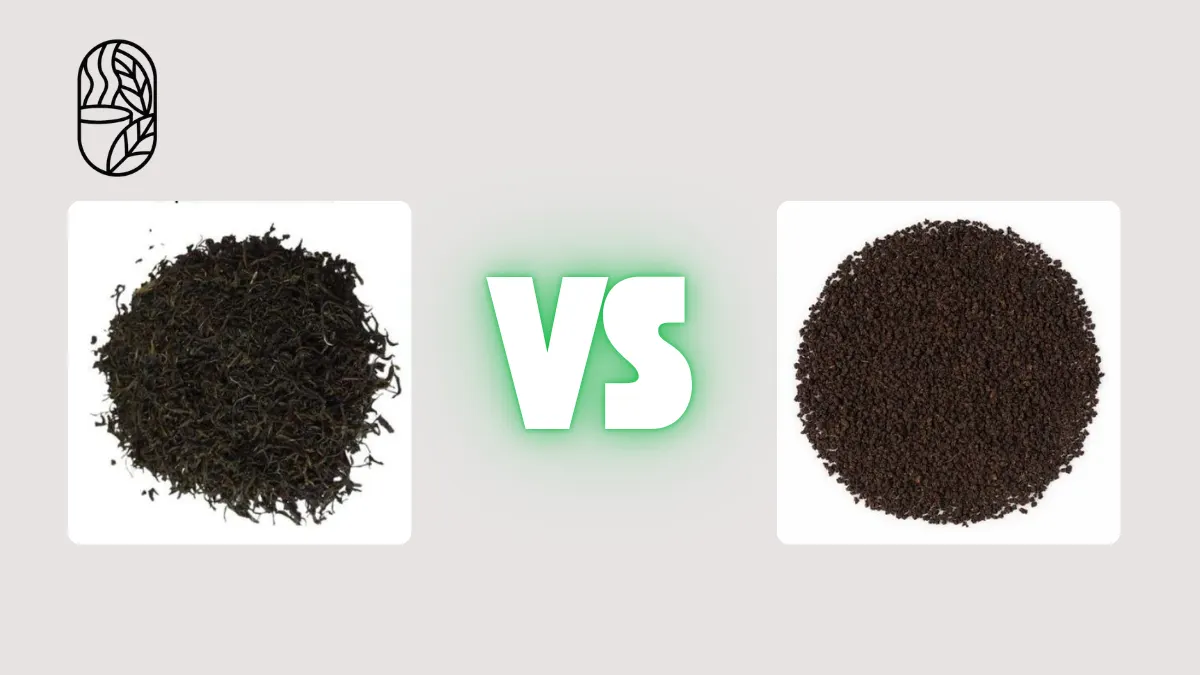
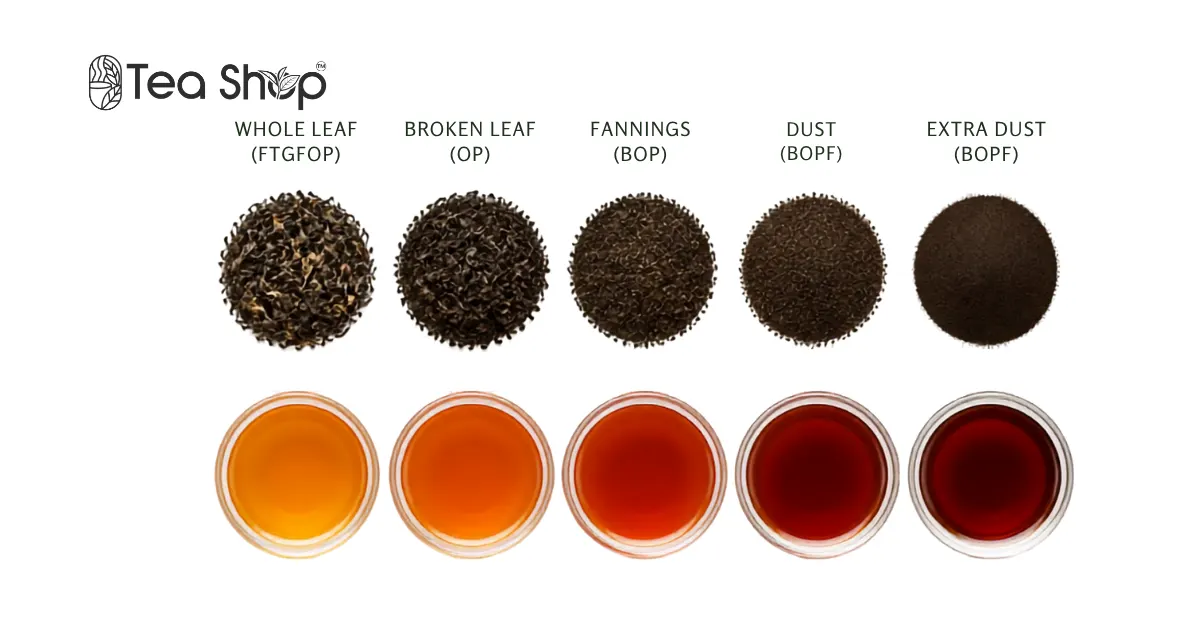
Tea grade usually describes the physical form, size or sorting category of made tea. It can influence how quickly the tea extracts, but it does not by itself prove overall quality.
Bangladesh Tea Research Institute explains that, after manufacture, made tea is sorted by size through sieves and that this sorting is called grading; BTRI gives grade examples such as BOP, OF and PD. That is a useful distinction because it separates processing, grading and quality instead of treating them as the same thing. Bangladesh Tea Research Institute
A tea can have a respected grade name and still disappoint if it is stale, poorly processed or badly brewed. A fine-particle tea can also be exactly the right choice when the goal is fast extraction and strong milk tea.
This guide explains how tea grade affects flavour and price in Bangladesh without turning grade abbreviations into a simplistic best-to-worst ranking.
Quick Summary: What Can Tea Grade Actually Affect?
| Tea-grade factor | What it can influence | What it does not prove by itself |
| Particle size | Extraction speed, colour release, brewing time | Overall quality |
| Leaf form | Visible leaf structure and brewing behaviour | Better taste for every drinker |
| Fannings or dust | Fast extraction and strong liquor | Poor quality automatically |
| Larger orthodox leaf | Slower extraction and more brewing control | More aroma automatically |
| Grade abbreviation | A sorting or trade category | Exact flavour without tasting |
| Grade + market demand | Retail or auction value | That the most expensive tea is best for you |
| Grade consistency | Repeatability of a batch | Freshness after poor storage |
The right grade depends on the cup you want.
A person making strong milk tea may value fast extraction. A plain-tea drinker may prefer a slower, more controlled infusion. An office may prioritise consistency, while a specialty-tea buyer may care more about leaf appearance and aroma.

What Is Tea Grade?
Tea grade is a classification applied to made tea after processing and sorting.
Grading Happens After the Tea Has Already Been Processed
Black tea in Bangladesh is commonly manufactured by CTC or orthodox methods. After manufacture, the dry tea is sorted into size-based categories.
This matters because three terms are often confused:
- Processing style: how the fresh leaf was manufactured, such as CTC or orthodox.
- Tea grade: how the made tea is sorted or described by size and form.
- Quality: the overall performance of the tea, including leaf appearance, aroma, liquor, taste, freshness and consistency.
CTC Is a Process, Not a Single Grade
CTC means Crush, Tear, Curl.
A CTC tea can be sorted into different particle-size grades after manufacture. That is why two CTC teas can look different, brew at different speeds and suit different recipes.
For buyers who want a stronger everyday cup, the Tea Shop BD CTC Black Tea collection is the more relevant place to compare products than assuming one grade abbreviation is automatically best.
Orthodox Is Also a Process, Not a Quality Score
Orthodox manufacture generally preserves more recognisable leaf structure than conventional CTC processing, but orthodox teas also come in different grades.
Tea Shop BD’s Orthodox Tea collection includes teas where the live product page can provide the tea type, grade or producer classification, serving guidance and pack details.
That is more useful than relying on the word orthodox alone.
Common Tea Grade Names: A Practical Buyer’s Guide
Grade terminology can vary by factory, auction system and producer. The following explanations are practical buying guidance rather than a claim that every factory uses identical specifications.
CTC and Fine-Particle Grades
BP — Broken Pekoe
BP generally refers to a broken-particle black-tea grade.
Depending on the factory and sorting system, BP may provide:
- relatively quick extraction;
- noticeable body;
- strong colour development;
- good performance with milk;
- a practical everyday black-tea cup.
Do not assume that every BP from every factory tastes the same. Origin, leaf standard, manufacturing quality, freshness and brewing still matter.
PF or Fannings-Type Grades
Fannings are relatively small tea particles. Grade abbreviations such as PF may be used in some CTC systems.
Because the particles are small, they can extract quickly. That can be useful for:
- fast black tea;
- milk tea;
- institutional service;
- recipes where a bold tea base is needed.
Small particle size is a brewing characteristic, not proof of poor quality.
PD, Dust and Other Fine Grades
Dust grades contain very fine tea particles and can release colour and strength rapidly.
They may suit drinkers who want:
- a strong cup in a short time;
- tea that remains noticeable after milk;
- consistent high-volume preparation.
The trade-off is that fine grades can become harsh quickly when too much tea or excessive brewing time is used.
Orthodox and Broken-Leaf Grades
BOP — Broken Orange Pekoe
BOP commonly means Broken Orange Pekoe.
It generally describes broken black-tea leaf pieces that are larger than very fine fannings or dust. Depending on the actual tea, BOP can offer a useful balance between:
- visible leaf character;
- reasonably quick extraction;
- body;
- aroma;
- plain-tea and light-milk flexibility.
BOP should not be treated as a guaranteed flavour profile. It is still a grade category, not a tasting note.
GBOP — Golden Broken Orange Pekoe
GBOP commonly means Golden Broken Orange Pekoe in orthodox naming systems.
The word golden in a grade name may refer to visible golden or tip-like material in the made tea, but buyers should not use the abbreviation alone as proof of superior cup quality.
A GBOP lot still needs to be judged by:
- clean dry-leaf appearance;
- aroma;
- liquor;
- flavour;
- freshness;
- consistency;
- value for the intended use.
FOP, TGFOP and Other Whole-Leaf Orthodox Labels
Orthodox naming can include whole-leaf labels such as FOP or TGFOP. Exact trade usage can vary, so the safest approach is to read the seller’s own verified product information rather than trying to rank every abbreviation from memory.
For example, Tea Shop BD’s live Orthodox Tea product page currently presents grade information alongside origin, brewing, pack size and other product details. That combination is more useful than a grade label in isolation.
Why Particle Size Changes the Cup
The easiest way to understand grade is to think about surface area and extraction.
Smaller particles expose more tea material to water at once. Larger pieces generally expose less surface area relative to their mass and can extract more gradually.
Extraction Tendency by Particle Size
| General particle form | Typical extraction tendency | Brewing risk | Often useful for |
| Fine dust | Very fast | Can become harsh quickly | Strong milk tea, fast service |
| Fannings / fine broken | Fast | Easy to over-extract | Milk tea, office or commercial preparation |
| Medium broken leaf | Moderate to fast | Needs controlled timing | Flexible black-tea use |
| Larger broken / orthodox leaf | Moderate | Requires enough steeping time | Plain tea, aroma-led drinking |
| Whole or near-whole leaf | Gradual | Weak cup if under-brewed | Slow brewing, leaf appreciation |
This table describes a tendency, not a guarantee.
A finely made tea can still be smooth. A large leaf can still taste rough. Processing and raw-material quality matter.
How Tea Grade Affects Flavour
Tea grade does not manufacture flavour by itself, but it changes how flavour compounds are extracted into water.
Strength and Body
Fine grades often give strength quickly.
That makes them practical when tea needs to remain noticeable after:
- milk;
- sugar;
- ginger;
- cardamom;
- or larger-batch preparation.
Larger leaf grades may build body more gradually.
Bitterness and Astringency
Fine particles can become bitter or rough faster when over-brewed because extraction happens quickly.
If a fine CTC or dust tea tastes harsh, first check:
- tea quantity;
- water volume;
- brewing time;
- whether the tea was boiled too long;
- how much milk was added afterward.
Do not assume the grade is defective because the cup was over-extracted.

Aroma
Larger visible leaves are often associated with aroma-led tea drinking, but leaf size does not guarantee more aroma.
Aroma depends on:
- fresh-leaf quality;
- cultivar;
- manufacture;
- oxidation;
- drying;
- storage;
- freshness;
- brewing.
Grade can affect the pace at which aroma and flavour move into the cup, but it cannot replace those factors.
Finish
The finish is what remains after swallowing.
A well-balanced tea may have a clean, brisk, soft, malty, floral or lingering finish depending on the product. Grade can influence extraction speed, but the final impression still depends on the tea itself.
How Tea Grade Affects Colour
Fine grades often release colour rapidly.
That is one reason they can look impressive in a short brew.
But dark colour is not proof of better tea.
A darker cup may result from:
- finer particles;
- more tea;
- hotter water;
- longer brewing;
- stronger oxidation;
- or simply over-extraction.
A lighter cup can still have excellent aroma and balance.
When judging a tea, consider colour together with:
- aroma;
- strength;
- body;
- clarity;
- flavour;
- finish.
Do not buy by liquor colour alone.
Which Tea Grade Works Best for Milk Tea?
There is no single grade that every Bangladeshi milk-tea drinker must use.
The common requirement is enough extraction and body to remain noticeable after milk.
Milk-Tea Grade Guide
| What you want | Grade or style worth testing | Why |
| Fast, strong dudh cha | Fine CTC, fannings or dust-type grades | Quick colour and strong extraction |
| Strong but slightly more controlled | BP or medium CTC grade | Good body with more timing flexibility |
| More leaf character with light milk | BOP or selected broken orthodox tea | Can balance aroma and body |
| Plain tea first, optional milk later | Larger orthodox leaf | More controlled extraction |
For daily milk tea, browse Tea Shop BD’s CTC Black Tea range and compare the live product information rather than selecting only from an abbreviation.
What If Milk Completely Hides the Tea?
Before changing grade, check the recipe.
The problem may be:
- too much milk;
- too much water;
- too little tea;
- too short a brew;
- or an unusually large cup.
A stronger grade cannot fix every recipe problem.
Which Grade Works Best for Plain Tea?
Plain tea makes it easier to notice the tea itself because milk and heavy sweetness are not covering the cup.
You may prefer:
- BOP or another broken-leaf grade for a balance of strength and aroma;
- larger orthodox leaf when you want slower extraction;
- whole-leaf orthodox tea when visible leaf character is part of the experience.
Tea Shop BD’s Orthodox Tea product is one example of a live page where buyers can review grade, serving size, brewing temperature and other details together.
That is the right way to use grade information: as part of the product profile, not as a standalone score.
How Tea Grade Affects Price in Bangladesh
Grade can influence price, but grade is only one part of the final retail price.
Grade Can Affect Market Value
A tea may command a different price when a particular grade has:
- stronger buyer demand;
- better visual uniformity;
- limited availability;
- desirable tip or leaf appearance;
- consistent manufacturing;
- a specific commercial use;
- or stronger cup performance in its target market.
But two teas with the same grade abbreviation can still sell at different prices.
Price Also Reflects Much More Than Grade
Retail price may also include:
- sourcing or auction cost;
- garden or lot quality;
- processing;
- sorting;
- storage;
- blending where applicable;
- packaging;
- labour;
- transport;
- business overhead;
- and the selected pack size.
That is why higher price does not automatically mean higher grade, and higher grade does not automatically mean better value for your cup.
Compare Like With Like
When comparing two grades, keep the comparison fair.
Check:
- the same or similar pack weight;
- tea type;
- grade or particle form;
- origin where verified;
- freshness and storage;
- brewing yield;
- whether you drink it plain or with milk.
Do not let a pack-size discount become confused with a grade-quality conclusion.
Why “Higher Grade” Does Not Always Mean “Better Tea”
The phrase higher grade is often used casually in retail marketing.
But in technical tea sorting, grade frequently describes the physical form of the made tea.
That means quality needs a wider evaluation.
Grade vs Quality
| Grade tells you mainly about | Quality requires you to consider |
| Particle or leaf size | Freshness |
| Sorting category | Clean manufacturing |
| Leaf form | Aroma |
| Broken, fannings or dust structure | Liquor quality |
| A trade or producer classification | Taste and finish |
| Brewing behaviour | Consistency and storage |
Tea Shop BD’s own Orthodox Tea page describes lot evaluation using factors such as leaf appearance, aroma, liquor, taste, grade and overall quality. That is a better model than reducing quality to grade alone.
How Grade Interacts With Freshness
A good grade stored badly can lose value quickly.
Tea can be affected by:
- humidity;
- heat;
- sunlight;
- air exposure;
- strong surrounding odours.
Fine grades are not exempt from this, and larger leaf grades are not magically protected.
If a tea smells flat, stale or damp, the grade name cannot restore it.
For Bangladesh conditions, follow the practical storage guidance in Tea Freshness and Storage in Bangladesh.
Brewing Time Should Change With Grade
One reason grade matters is that different particle sizes do not always need the same brewing time.
Fine Grades
Start conservatively.
Fine particles can extract quickly, so a long uncontrolled brew may become harsh.
Medium Broken Grades
These can offer more flexibility. Adjust time according to the tea and whether milk will be added.
Larger Orthodox Leaves
Give the leaves enough space and enough time to open. A cramped infuser can make a good leaf tea perform poorly.
For tea-type temperature and timing guidance, use Tea Shop BD’s live Tea Brewing Guide in Bangladesh and then follow the individual product page where it gives more specific instructions.
Does Tea Grade Affect Caffeine?
Grade alone cannot tell you exactly how much caffeine will be in a cup.
However, particle size can affect extraction speed. Fine particles may release soluble compounds quickly because more surface area is exposed to water.
The amount of caffeine in the finished cup can also depend on:
- the tea material;
- leaf quantity;
- water temperature;
- steeping time;
- serving size;
- repeated infusions.
So a buyer should not assume:
“Dust always has the most caffeine”
or
“Whole leaf is always low caffeine.”
Those are oversimplifications.
Does Grade Affect Re-Steeping?
It can influence the experience, but grade does not decide everything.
Fine particles often give up a large amount of their soluble material quickly in the first infusion.
Larger intact leaves may sometimes provide more gradual extraction across repeated infusions.
But re-steeping also depends on:
- tea type;
- processing;
- leaf integrity;
- first-steep time;
- water temperature;
- personal taste.
Treat repeated infusion as a product-and-brewing question, not a universal grade rule.
How to Read Tea Grade on an Online Product Page
A useful tea product page should tell you enough to understand the product without forcing you to decode the grade alone.
Essential Information to Look For
- Tea type: CTC black, orthodox black, green, white or another style.
- Grade or leaf form: where verified and useful.
- Origin: only when the seller can support it.
- Net weight: so pack sizes can be compared fairly.
- Serving guidance: tea quantity and water volume.
- Brewing temperature and time: especially for loose leaf.
- Storage: how to protect the tea after opening.
- Current price: taken from the live product page.
A Grade Label Without Context Is Not Enough
A product described only as premium grade tells you very little.
Ask:
- Is it CTC or orthodox?
- Is it fine, broken or whole leaf?
- Is the origin verified?
- What kind of cup is it intended to make?
- How should it be brewed?
Tea Shop BD’s online shop lets buyers compare current tea types, pack options and live product details rather than relying on a single marketing word.
A Simple Grade-to-Cup Decision Guide
Use this five-step process before buying.
Step 1 — Decide How You Drink Tea
If you mostly drink milk tea
Start with CTC, BP, fannings or another grade designed to give sufficient strength.
If you mostly drink plain tea
Consider broken or larger orthodox leaf where aroma and controlled extraction matter more to you.
Step 2 — Check the Product, Not Just the Grade
Look for verified information about:
- origin;
- tea type;
- grade;
- brewing;
- storage;
- pack size.
Step 3 — Buy a Sensible Quantity
If you have never tried the grade, avoid buying a large quantity only because the unit price looks attractive.
Tea Shop BD’s Tea Trial Packs can be useful when your goal is to compare tea styles before committing to a larger pack.
Step 4 — Brew the Grade Correctly
A fine grade brewed like a whole leaf may become too strong.
A whole leaf brewed like dust may taste weak.
Step 5 — Judge the Cup
Ask:
- Do I enjoy the aroma?
- Is the strength right?
- Does it work with milk if I use milk?
- Is the finish clean?
- Is the price sensible for how I drink it?
That is more useful than asking whether the grade is “high” or “low.”
Common Tea-Grade Buying Mistakes
Mistake 1 — Treating Grade as a Universal Ranking
Problem: assuming every larger or more elaborate grade name is automatically better.
Better approach
Use grade to understand leaf form and brewing behaviour, then judge quality separately.
Mistake 2 — Confusing CTC With a Grade
Problem: treating CTC as though it were one single particle size.
Better approach
Remember that CTC is a manufacturing method and that CTC tea can be sorted into multiple grades.
Mistake 3 — Assuming Dust Means Bad Tea
Problem: rejecting a grade that may be perfectly suited to strong, fast milk-tea preparation.
Better approach
Judge cleanliness, freshness and cup performance for the intended use.
Mistake 4 — Buying by Dry-Leaf Appearance Alone
Problem: attractive leaf can influence perception before the tea is brewed.
Better approach
Evaluate the liquor as well as the dry leaf.
Mistake 5 — Buying by Colour Alone
Problem: dark liquor is mistaken for superior quality.
Better approach
Judge aroma, body, balance and finish together with colour.
Mistake 6 — Ignoring Freshness
Problem: an impressive grade name is trusted even when storage has damaged the tea.
Better approach
Check packaging and store tea correctly after opening.
Mistake 7 — Assuming Every BOP, BP or Fannings Tea Tastes the Same
Problem: the abbreviation is treated as a complete flavour description.
Better approach
Remember that origin, batch, processing and freshness can all change the cup.
Mistake 8 — Comparing Price Without Comparing Use
Problem: a cheaper tea is called better value even though it does not suit the drinker’s recipe.
Better approach
Compare value in the context of the cup you actually make.
Frequently Asked Questions
What does BOP mean in tea?
BOP commonly means Broken Orange Pekoe. It describes a broken-leaf black-tea grade rather than a universal quality score. BOP can offer a useful balance of extraction, body and visible leaf structure, but the exact flavour depends on the tea’s origin, manufacture, freshness and brewing.
What is the difference between BP and BOP?
Both are broken black-tea grade terms, but their exact particle size and commercial meaning can vary with the grading system. BP is commonly associated with a relatively small broken grade, while BOP generally describes Broken Orange Pekoe. Check the producer or seller’s own grade description instead of assuming every BP or BOP is identical.
Is tea dust bad quality?
No. Dust describes a very fine particle form. A clean, fresh dust grade can be useful for fast extraction and strong milk tea. It may become harsh more quickly when over-brewed, so quantity and brewing time matter.
Which tea grade is best for dudh cha?
Many drinkers prefer a strong CTC grade, BP, fannings or dust-type tea because it can produce colour and body quickly and remain noticeable after milk. The best choice depends on your milk ratio, sweetness, spices and preferred strength.
Which grade is better for plain tea?
There is no single best grade. BOP, selected broken orthodox teas and larger whole-leaf grades can all work well for plain tea. Choose according to whether you want faster strength, more visible leaf or slower extraction.
Does a golden-looking tip guarantee premium quality?
No. Golden or tip-like material can affect appearance and may be part of a grade name, but it does not prove the finished cup is superior. Freshness, processing, aroma, liquor, taste and consistency still need to be evaluated.
Does tea grade affect caffeine?
Grade can influence extraction speed because smaller particles expose more surface area, but grade alone does not determine the total caffeine in your cup. Tea quantity, water temperature, steeping time, serving size and the tea material itself also matter.
Why can two teas with the same grade cost different amounts?
Because retail price reflects more than grade. Origin, batch quality, sourcing cost, market demand, processing, sorting, freshness, packaging, pack size and business costs can all affect the final price.
Final Thoughts
Tea grade matters, but it matters in a specific way.
It helps describe the physical form of made tea and can tell you something about how quickly the tea is likely to extract.
Fine grades can be excellent for quick, strong milk tea.
Medium broken grades can balance body and brewing control.
Larger orthodox leaves can suit slower plain-tea preparation.
None of those statements creates a universal ranking.
The most useful buying rule is:
Use grade to understand the tea. Use the cup to judge the tea.
When buying tea in Bangladesh, check the tea type, verified grade, freshness, origin where supported, brewing guidance, pack size and intended use together.
Then choose the grade that produces the cup you actually want to drink.