
Green tea can be one of the easiest teas to enjoy once the brewing method is under control. It can also be one of the easiest teas to make unpleasant when the water is too hot, the leaves stay in the cup too long, or too much tea is used for the amount of water.
That is why a disappointing cup does not automatically mean you chose a bad tea.
The same loose-leaf green tea can taste light and balanced in one brew, then harsh or flat in the next simply because the brewing variables changed.
For most everyday loose-leaf green teas, a useful starting point is about 2–3 grams of tea for 200–250 ml of water, water around 75–85°C, and a steep of roughly 1–3 minutes. The UK Tea & Infusions Association recommends around 80°C for green tea, while the Tea and Herbal Association of Canada also gives 80°C with a 1–3 minute steep as a broad guide.
That is a starting point, not a rule for every product.
Some flatter, pan-fired or tightly rolled green teas may respond differently. Some specialty styles prefer cooler water. The individual product instruction should take priority once it has been verified and standardised.
If you are choosing a tea to practise with, browse Tea Shop BD’s Green Tea collection and select one product first. Learn how that tea responds before changing to another style.
Quick Answer: How Do You Brew Green Tea Correctly?
For one normal cup, begin with this method:
- Use fresh drinking water.
- Measure about 2–3 grams of loose green tea.
- Use about 200–250 ml of water.
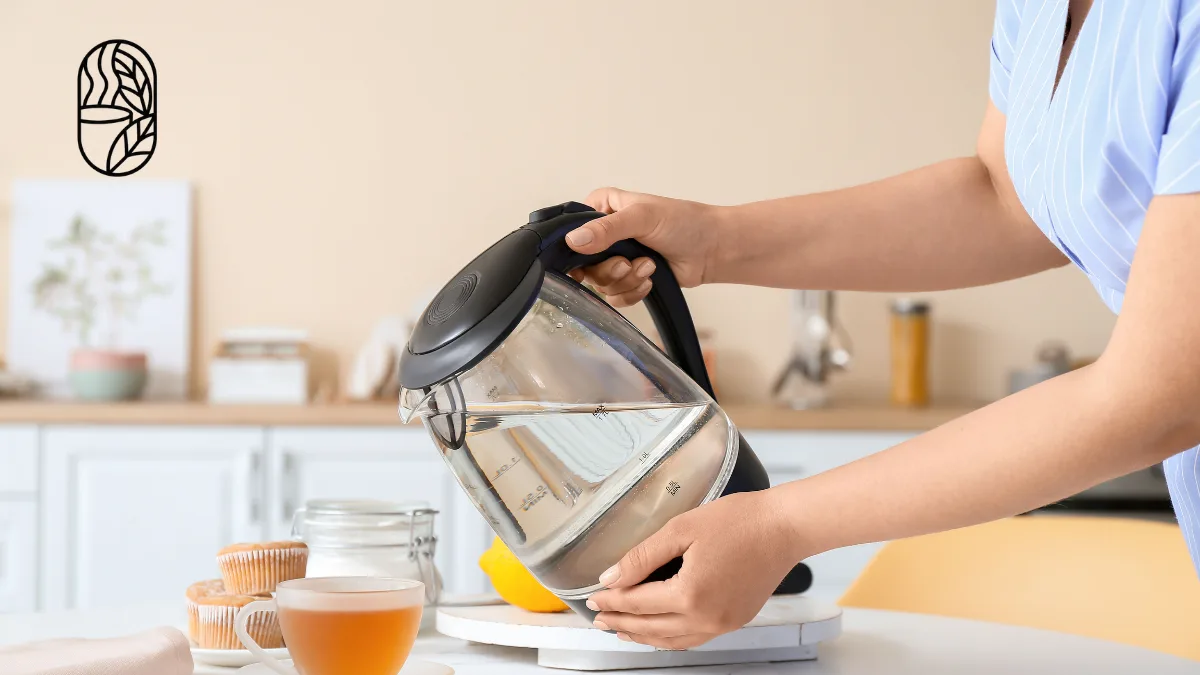
- Let freshly boiled water cool to roughly 75–85°C.
- Pour the water over the leaves.
- Steep for about 1–3 minutes.
- Strain or remove the leaves completely.
- Taste the tea plain before adding lemon, honey or sugar.
- Adjust only one variable on the next brew.
The broader Tea Shop BD Tea Brewing Guide in Bangladesh explains how temperature and steeping differ across black, green, white, oolong and other tea styles. This page is narrower: it owns the green-tea brewing method.
Green Tea Brewing Ratio at a Glance
| Brewing variable | Practical starting point | What to adjust first |
|---|---|---|
| Loose green tea | 2–3 g | Reduce if the cup is too concentrated |
| Water | 200–250 ml | Keep volume consistent while testing |
| Temperature | 75–85°C | Lower if the cup is harsh or bitter |
| Steeping time | 1–3 minutes | Shorten if the finish becomes rough |
| Leaf removal | Remove after steeping | Do not let leaves sit indefinitely |
| Additions | Taste plain first | Add only after the base cup is balanced |
These numbers are intentionally broad. Green tea is a category, not one identical leaf style.
The Four Variables That Control Green Tea
Green tea brewing becomes much easier when you stop trying to memorise a perfect recipe and instead learn the variables that control extraction.
1. Tea Quantity
Tea quantity controls how much leaf material is available to infuse into the water.
Too little can produce a thin cup. Too much can produce an intensely concentrated infusion even if the steep is short.
A useful baseline is 2–3 grams per 200–250 ml.
A teaspoon can work for everyday use, but it is only an approximation. Large open leaves, flat leaves and tightly rolled tea can occupy very different amounts of spoon space at the same weight.
Better practice
If you want repeatable results, use a small digital scale for the first few brews of a new tea. Once you learn the quantity visually, you may no longer need to weigh every cup.
2. Water Volume and Quality
Tea quantity only makes sense when connected to water volume.
Two grams in a small 150 ml cup will taste different from two grams in a large 400 ml mug.
Water quality matters too. If the water tastes strongly metallic, chlorinated, stale or heavily mineralised on its own, it can affect the tea.
Bangladesh household check
If your green tea repeatedly tastes flat despite careful brewing, prepare the same tea once with your normal drinking water and once with another suitable drinking water. Keep tea quantity, temperature and time the same.
If the result changes noticeably, water is part of the problem.
3. Water Temperature
Temperature is one of the fastest ways to change green-tea flavour.
Hotter water generally increases extraction speed. Cooler water slows it.
That is why pouring aggressively boiling water onto a delicate green tea can produce a harsher result than using cooler water.
A practical baseline
For many loose green teas, begin near 80°C.
If the tea tastes harsh, reduce the temperature before changing several other variables.
If the cup seems unusually thin despite enough leaf and adequate time, try slightly warmer water before adding a large amount of extra tea.
4. Steeping Time
The leaves continue extracting as long as they remain in contact with the water.
A tea that tastes balanced at two minutes can become more bitter or drying if the same leaves remain submerged for another ten minutes.
A practical baseline
Begin around 1–3 minutes and taste.
Do not assume that a longer steep is automatically a better steep.
Step-by-Step: Brew One Reliable Cup
Use this method to establish a baseline before experimenting.
Step 1: Start With Fresh Water
Use water that is safe to drink and pleasant on its own.
Avoid repeatedly reheating the same kettle of water throughout the day when fresh water is available.
The UK Tea & Infusions Association also recommends freshly drawn water and notes that water characteristics can affect tea flavour.
What you need
- one cup or mug;
- a kettle;
- 2–3 grams of loose green tea;
- 200–250 ml water;
- a basket infuser, teapot or small strainer;
- a timer;
- a thermometer if you want more consistency.
Step 2: Heat the Water
Bring fresh water to a boil, then allow it to cool toward the target range.
You do not need a temperature-controlled kettle, although it is convenient.
Without a thermometer
Transfer boiled water into another clean vessel and let some heat escape before pouring it onto the leaves.
Do not rely on one universal rule such as “wait exactly five minutes.” Cooling speed changes with kettle material, room temperature, water volume and vessel size.
Step 3: Measure the Leaves
Use 2–3 grams for one 200–250 ml cup as your starting point.
Do not compress large leaves into a teaspoon simply to make them fit.
If you are brewing a Tea Shop BD product such as BTRI Green Tea, start from the verified product guidance once the page instruction is consistent, then use this article’s troubleshooting method to fine-tune the cup.
Step 4: Give the Leaves Space
Loose leaves need contact with water.
A tiny tea ball packed tightly with leaves can restrict expansion and circulation.
Better equipment choices
- roomy basket infuser;
- teapot with enough leaf space;
- brewing cup;
- mug followed by a strainer.
Expensive ceremonial equipment is not required.
Step 5: Pour and Start the Timer
Pour the appropriately cooled water over the leaves and start timing immediately.
A simple timer on your phone is enough.
Step 6: Taste at the Short End
If you are testing a new tea, taste near the shorter end of the range.
If the cup already seems balanced, stop the infusion.
If it is too light, give it a little more time.
Step 7: Remove the Leaves Completely
Lift out the infuser or pour the tea through a strainer.
This step gives you control.
Do not leave the leaves in the mug for the next fifteen minutes unless that style of continuous brewing is intentional.
Step 8: Taste Plain First
Before adding honey, sugar or lemon, take at least one sip plain.
This tells you whether the brewing method itself worked.
Only then decide whether an addition improves the drink.
How to Get Around 80°C Without a Thermometer
A thermometer is useful but not essential.
Method 1: Kettle Rest
Boil fresh water, switch off the kettle and let the water cool before brewing.
The exact time depends on the kettle and environment, so use this as an approximation rather than a strict formula.
Method 2: Vessel Transfer
Pour freshly boiled water into a clean jug or cup, then transfer it again before brewing.
Each transfer releases some heat.
Method 3: Mix Hot and Cooler Water
For repeatable household brewing, some people mix freshly boiled water with a measured amount of cooler drinking water. If you use this method, keep the proportions consistent and make sure all water is safe to drink.
Method 4: Temperature-Controlled Kettle
If green tea becomes part of your daily routine, a kettle that can stop around 80°C is the simplest repeatable option.
How Long Should Green Tea Steep?
There is no single perfect time for every green tea.
A broad starting range is 1–3 minutes.
Shorter steep
A shorter infusion can produce a lighter cup and reduce the risk of harshness.
Longer steep
A longer infusion can increase strength, but it can also increase bitterness or astringency depending on the tea.
Product-specific differences
Tea Shop BD’s Sencha Green Tea and Dragon Well Tea are different green-tea styles, so they should not automatically be forced into one identical recipe.
Use a general baseline to learn the variables, then follow the final verified product instruction for the specific tea.
Why Does Green Tea Taste Bitter?
A little bitterness or astringency can naturally exist in tea. The problem is when the cup becomes unpleasantly harsh.
Common cause 1: Water too hot
If you used water directly from a rolling boil, try cooler water next time.
Common cause 2: Steep too long
A forgotten cup often becomes much stronger than intended.
Common cause 3: Too much leaf
A large amount of tea in a small mug can create a concentrated infusion very quickly.
Common cause 4: Leaves left in the cup
Even if the tea tasted good at minute two, it can become harsher while you continue drinking.
Common cause 5: Several errors at once
Too much tea + near-boiling water + long steeping is a common combination.
The most useful fix is not adding sugar immediately. It is correcting the brewing method.
Why Does Green Tea Taste Weak or Flat?
Weak tea can come from the opposite set of problems.
Too little leaf
A few fragments in a large mug may simply be insufficient.
Water too cool
Gentle does not mean lukewarm.
Steep too short
Very short brewing with a low leaf quantity can produce a faint cup.
Too much water
A large mug changes the ratio.
Tea stored badly
Tea that has lost aroma through air, heat, moisture or strong surrounding odours cannot be fully restored by brewing adjustments.
For storage, follow Tea Shop BD’s Tea Freshness and Storage in Bangladesh guide.
Green Tea Troubleshooting Table
| Your cup tastes… | Change first | Keep unchanged while testing |
|---|---|---|
| Very bitter | Lower water temperature | Tea quantity and water volume |
| Harsh or drying | Shorten steeping time | Temperature and leaf amount |
| Extremely strong | Use less leaf | Water volume and time |
| Thin | Add slightly more leaf | Temperature and time |
| Weak | Extend steep modestly | Leaf amount and temperature |
| Flat | Test fresher tea or different water | Brewing ratio |
| Mineral-like | Compare another drinking water | Tea and time |
| Good at first, bitter later | Remove leaves sooner | Initial recipe |
The principle is simple: change one variable at a time.
Brewing Green Tea in Different Vessels
The vessel matters less than your ability to control water contact and remove the leaves.
Mug + Basket Infuser
This is one of the easiest methods for home or office use.
Method
- Add measured leaves to the basket.
- Place it in the mug.
- Pour the brewing water.
- Start the timer.
- Lift the basket out when ready.
Mug + Kitchen Strainer
No infuser is required.
Method
- Brew the leaves directly in the mug.
- Pour the finished tea through a small food-safe strainer into a second cup.
- Stop extraction by separating the leaves completely.
Teapot
A teapot is useful for several cups.
Scaling rule
Scale the tea according to the water volume rather than using one teaspoon regardless of pot size.
If your one-cup baseline is 2.5 grams for 250 ml, a 500 ml pot might begin near 5 grams before you fine-tune it.
French Press
A clean French press can work for green tea if it does not carry old coffee odours.
Press gently and pour all of the liquor after the desired steep so the remaining tea does not continue extracting.
Can Green Tea Leaves Be Brewed Twice?
Often, yes.
Many loose-leaf green teas can provide a second useful infusion, but there is no guarantee that every product will perform the same way.
After the first brew
- drain the leaves;
- do not leave them soaking;
- re-brew while they remain suitable;
- adjust the second steep based on the first cup.
What to expect
The second cup may not taste identical. Leaves may open further, and the balance of aroma and strength can shift.
This article only covers the basic technique. A dedicated re-steeping article should own the deeper multi-infusion intent.
Should You Rinse Green Tea Before Brewing?
Not automatically.
For ordinary loose green tea, a preliminary rinse can remove some immediately soluble flavour along with anything you intended to wash away.
Use a rinse only when the specific tea style or verified product instruction gives you a reason.
Do not create a universal “always rinse green tea” rule.
Should You Add Milk, Sugar, Honey or Lemon?
The first cup of a new green tea is most useful when tasted plain.
That gives you a reference point.
Milk
Green tea is usually explored without milk because milk can dominate lighter tea character. Personal preference still matters.
Sugar
A small amount is possible, but do not use sugar to hide a badly over-steeped tea.
Honey
Honey adds its own aroma as well as sweetness.
Lemon
Lemon changes acidity and can make the cup feel brighter.
The key rule is to balance the base tea first, then add flavour.
How Different Green Tea Styles May Need Different Brewing
“Green tea” includes many shapes and processing styles.
Flatter or pan-fired styles
A tea such as Tea Shop BD’s Dragon Well Tea should be treated as its own product rather than assumed to brew exactly like every other green tea.
Steamed styles
Tea Shop BD’s Sencha Green Tea is presented as a steamed green-tea style. Steamed leaf can respond differently from pan-fired leaf, so the final verified product guidance should take priority.
Rolled or compact styles
Tightly shaped leaves may open gradually during brewing. Give them space and observe how the leaf changes.
Everyday loose green tea
For a general loose-leaf product, the 2–3 g / 200–250 ml / around 80°C / 1–3 minute framework is a reasonable place to begin.
Brewing Green Tea in Bangladesh’s Warm Weather
Hot weather changes serving preference, not the basic extraction principles.
Hot tea
Brew normally, strain and drink soon after preparation.
Chilled tea
Brew a normal infusion, separate the leaves and cool the tea safely before refrigeration.
Cold brew
Cold brewing uses a different ratio and a much longer infusion time than hot brewing. Follow a verified product method or a dedicated cold-brew guide rather than assuming the hot-brew ratio should be used unchanged.
Green Tea and Caffeine: Keep the Claim Simple
Green tea made from Camellia sinensis naturally contains caffeine unless the specific product is genuinely decaffeinated or otherwise verified caffeine-free.
Brewing conditions can influence how much caffeine reaches the cup, but colour alone cannot tell you the amount.
This brewing article should not become the site’s caffeine pillar. That belongs in the dedicated caffeine guide.
Green Tea Health Claims: Keep Brewing Separate From Medicine
Green tea contains naturally occurring plant compounds, including polyphenols and catechins.
That does not justify guaranteed treatment claims.
The goal of this article is to help readers prepare a better cup—not to promise weight loss, disease prevention, blood-sugar control or another medical result.
If a product page or older blog content makes strong medical claims, clean those claims separately rather than repeating them here.
Seven Common Green Tea Brewing Mistakes
Mistake 1: Treating Green Tea Like CTC Milk Tea
Green tea often needs gentler brewing than tea intended for a strong milk-based recipe.
Fix
Start near 80°C and use a shorter steep.
Mistake 2: Pouring Boiling Water Automatically
Fix
Let the water cool before brewing unless the verified product method specifically says otherwise.
Mistake 3: Guessing a Large Quantity
Fix
Begin with 2–3 grams per 200–250 ml.
Mistake 4: Forgetting the Timer
Fix
Use a phone timer until the process becomes automatic.
Mistake 5: Leaving the Leaves in the Cup
Fix
Separate the leaves when the infusion is ready.
Mistake 6: Ignoring Water Quality
Fix
Compare another suitable drinking water if the cup repeatedly tastes unusual.
Mistake 7: Changing Everything at Once
Fix
Change only temperature, time, quantity or water—one variable per test.
A Better Way to Learn One Tea
When you open a new green tea, create a baseline record.
| Variable | Baseline example |
|---|---|
| Tea | One selected green tea |
| Leaf amount | 2.5 g |
| Water | 250 ml |
| Temperature | 80°C |
| Time | 2 minutes |
| Result | Write one sentence after tasting |
If it is too bitter
Keep leaf and water the same. Lower the temperature slightly.
If it is too weak
Keep temperature and water the same. Increase leaf slightly or extend time modestly—not both at once.
If it tastes good
Repeat the same recipe before changing anything.
Consistency is what turns random brewing into useful comparison.
How to Store Green Tea After Opening
Good brewing starts before the kettle is switched on.
Bangladesh’s humidity makes storage especially important.
Keep the tea protected from
- moisture;
- direct sunlight;
- heat;
- strong spices and cooking odours;
- repeated unnecessary air exposure.
Daily storage habit
- Open the package only when needed.
- Use a clean, dry spoon.
- Close it immediately.
- Keep it in a cool, dry cupboard.
- Do not place it beside the stove or sink.
For the full storage method, use Tea Shop BD’s Tea Freshness and Storage in Bangladesh guide.
Choosing a Green Tea to Practise With
Do not try to master five products at the same time.
Choose one green tea, make several controlled brews and learn what changes the cup.
Tea Shop BD currently lists multiple options in its Green Tea collection, including BTRI Green Tea, Dragon Well Tea, Sencha Green Tea and other loose-leaf selections.
Once you can reproduce a good cup, compare another style.
If you want to browse all currently available products rather than only green tea, use the Tea Shop BD shop.
The Green Tea Rule Worth Remembering
If you remember one principle, remember this:
Green tea usually rewards control more than force.
Start with fresh water.
Measure the leaves.
Use a sensible temperature.
Watch the time.
Remove the leaves.
Taste.
Then adjust one thing.
That simple process is more useful than memorising dozens of recipes.
Frequently Asked Questions About Brewing Green Tea
What temperature is best for green tea?
There is no single temperature for every product, but around 80°C is a practical general starting point. The UK Tea & Infusions Association recommends around 80°C for green tea, and the Tea and Herbal Association of Canada also lists 80°C as a broad guide. Some specialty green teas may prefer cooler or slightly different conditions, so use verified product-specific guidance when available.
How long should green tea steep?
For a conventional loose-leaf cup, begin around 1–3 minutes. Taste and adjust from there. Longer steeping increases extraction but does not automatically improve balance. If the tea becomes harsh, shorten the steep before adding sweetener to hide the problem.
How much loose green tea should I use for one cup?
Approximately 2–3 grams for 200–250 ml of water is a useful starting ratio. A teaspoon can work as a rough household measure, but weight is more reliable because leaf shapes vary.
Can I pour boiling water directly onto green tea?
You can, but many green teas may become harsher when brewed with water straight from a rolling boil. A more useful baseline is to let the water cool toward the 75–85°C range, then adjust according to the specific product and your taste.
Why does my green tea taste bitter?
The most common causes are water that is too hot, a steep that is too long, too much leaf for the water volume, or leaving the leaves in the cup. Lower one variable at a time so you can identify what actually improves the tea.
Can I brew green tea leaves more than once?
Many loose-leaf green teas can be infused more than once. Drain the leaves after the first infusion and adjust the next steep based on how the first cup tasted. The second infusion may have a different balance rather than simply being a weaker copy.
Can I make green tea without a teapot?
Yes. A mug and small kitchen strainer are enough. Brew the loose leaves directly in the mug, then strain into another cup when the desired steep is complete. A basket infuser is convenient but not required.
Should I drink green tea without sugar?
That is a personal preference. For a new tea, tasting it plain first helps you judge whether the brewing method is working. Once the base cup is balanced, add sugar, honey or lemon if you prefer.
Final Thoughts
Learning how to brew green tea correctly is mainly about controlling four things: leaf quantity, water, temperature and time.
Start with roughly 2–3 grams of loose green tea for 200–250 ml of water, use water near 80°C as a broad baseline, steep for about 1–3 minutes, then remove the leaves completely.
If the cup is bitter, do not immediately blame the tea.
Check the temperature.
Check the steeping time.
Check the quantity.
If the cup is weak, adjust only one variable at a time.
Different Tea Shop BD green teas may need different final recipes, which is exactly why this guide focuses on method rather than one rigid number.
Once you can reproduce a balanced cup consistently, comparing different green-tea styles becomes much more meaningful.