
Start With the Map, Not the Myth
A regional tea map is useful only when it helps you compare real tea—not when it turns a place name into a flavour stereotype.
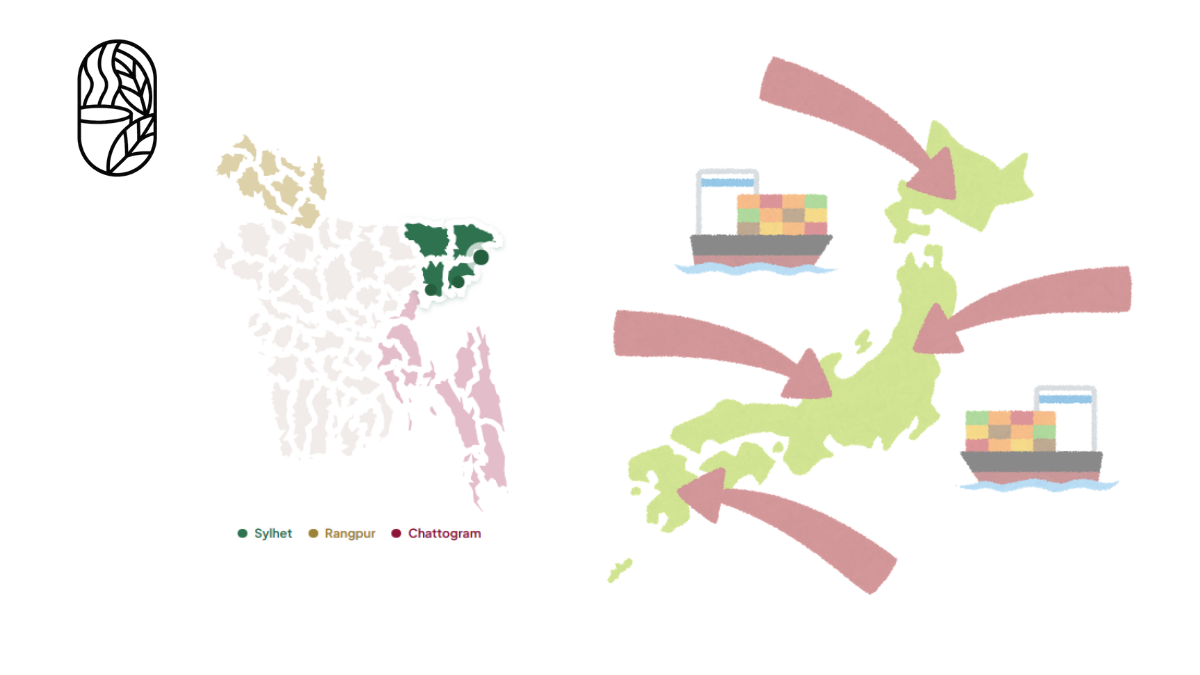
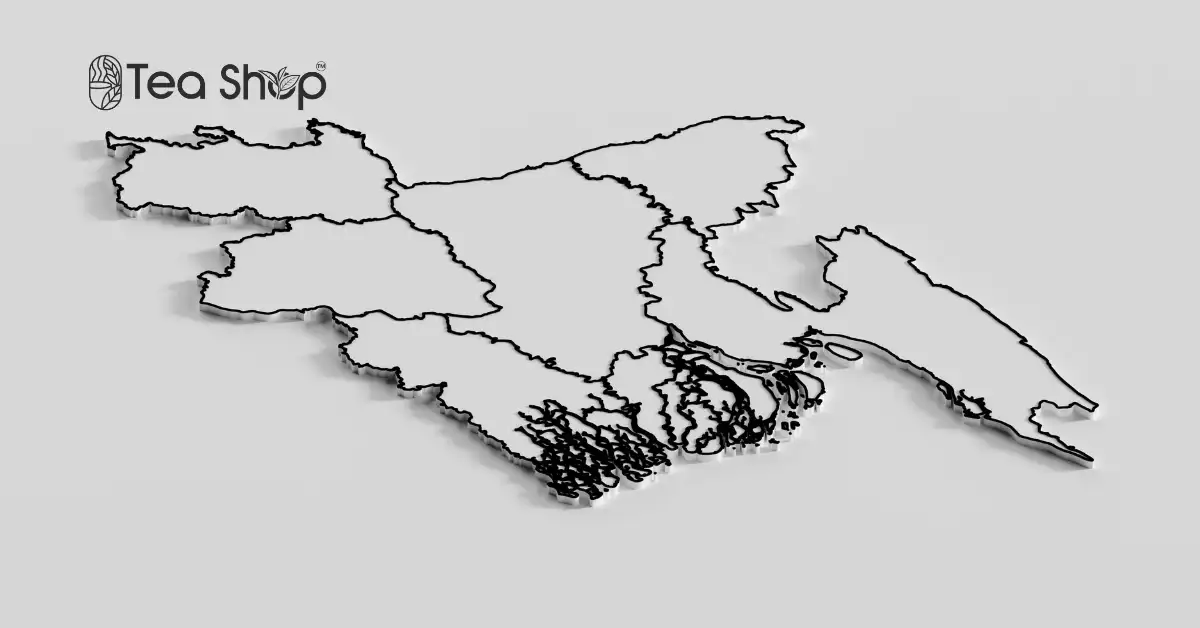
Buyers in Bangladesh often see names such as Sreemangal, Chattogram, Panchagarh and Lalmonirhat attached to tea. Those names matter because tea is an agricultural product and growing conditions are not identical everywhere. But region is only one layer of the final cup.
The same region can produce different tea styles. A tea can be processed as CTC, orthodox black, green, white or another style. Harvest timing, cultivar, leaf grade, factory practice, storage and brewing can all move the cup in a different direction.
So this guide does not say:
Sreemangal always tastes like X, Panchagarh always tastes like Y, or Chattogram always makes stronger tea.
Instead, it gives you a practical map for answering four questions:
- What does the regional name actually tell me?
- What does it not tell me?
- What should I compare in the cup?
- What should I verify before buying?
If you are new to origin terminology, first read Tea Shop BD’s Bangladesh Tea Origin Guide for New Buyers. It explains the difference between growing origin, processing location, auction route, packing location and seller identity.
Bangladesh Tea Regions at a Glance
This is the safest way to read the map.
| Place / source reference | What the name can legitimately tell you | What it cannot prove by itself | Best buyer question |
|---|---|---|---|
| Sreemangal | Connection with one of Bangladesh’s best-known tea hubs and an active auction centre | One fixed flavour, one garden, or one processing style | Is this CTC, leaf black, orthodox, green or a blend? |
| Chattogram | Connection with an established tea-growing district and the country’s major auction system | That the tea was grown in Chattogram merely because it was traded there | Is “Chattogram” the growing origin, processing location or auction route? |
| Panchagarh | Connection with northern Bangladesh tea production and an auction centre | That all northern tea is light, delicate or orthodox | What tea style and batch is this? |
| Lalmonirhat | Connection with Bangladesh’s northern tea expansion and selected regional production | A guaranteed specialty profile or fixed grade | What product-level origin and processing details are verified? |
The Bangladesh Tea Board currently lists Chattogram, Sreemangal and Panchagarh as auction centres for the 2026–27 auction year. That is useful trade context, but an auction centre is not automatically the growing origin of every tea sold through it. See the Bangladesh Tea Board auction-market information.
The Tea Board also documents the expansion of tea cultivation in northern districts including Panchagarh and Lalmonirhat, which is why northern origin is now an important part of Bangladesh tea buying. See the Bangladesh Tea Board tea-industry status publication.
How to Read Flavour Without Turning It Into Geography
A flavour map works best when you compare sensory dimensions instead of trying to memorize regional adjectives.
Aroma
Smell the dry leaf, the wet leaf and the brewed liquor.
You may notice impressions that feel floral, grassy, malty, toasted, fruity, sweet, earthy or fresh. These are tasting observations—not proof of origin.
Body
Body is how light, medium, round or full the tea feels in the mouth.
A full-bodied CTC tea and a light white tea may both be excellent. Body is a style characteristic, not a universal quality score.
Strength
Strength is the intensity you experience in the cup.
It depends heavily on leaf size, processing, tea-to-water ratio, time and temperature. A region name alone cannot tell you whether the cup will be strong.
Finish
The finish is what remains after you swallow.
It may feel brisk, clean, sweet, dry, soft or lingering. Again, the useful question is whether you enjoy it—not whether one finish is automatically more “premium.”
Brewing behaviour
Notice how quickly the tea releases colour and flavour.
Fine CTC particles usually extract faster than large orthodox leaves. This processing effect can be stronger than the regional effect the buyer expects to taste.
For the agricultural side of this question, Tea Shop BD’s How Climate Influences Tea in Bangladesh explains why rainfall, temperature and soil moisture matter without pretending that weather alone creates a finished flavour.
Sreemangal: A Tea Hub, Not a Single Taste
Sreemangal is one of the most recognisable names in Bangladesh tea. It is associated with tea gardens, tea trade, tasting, tourism and an auction centre. But that broad importance is exactly why the word Sreemangal should not be used as shorthand for one cup profile.
What the name can tell you
A verified Sreemangal reference can give you useful sourcing context. Depending on the product, it may indicate a garden or supplier in the wider Sreemangal/Moulvibazar tea area, a tea acquired through the Sreemangal auction system, or another documented local connection.
What it cannot tell you
It does not tell you whether the tea is:
- CTC black tea;
- leaf black tea;
- orthodox tea;
- green tea;
- a blend;
- or a specialty batch.
It also does not tell you the grade, harvest, exact garden, brewing time or whether the tea will suit milk.
How to taste a Sreemangal-labelled tea
Instead of asking “What does Sreemangal taste like?”, ask:
- How fast does this tea extract?
- Is the body light, medium or full?
- Does the aroma remain noticeable after cooling?
- Does the finish feel brisk, soft or drying?
- Is the tea more enjoyable plain or with milk?
Those answers describe the actual product rather than a regional stereotype.
Buyer check
If a listing says only “Sreemangal tea,” look for the next layer of information: tea type → grade or leaf style → verified source → brewing guidance → pack size.
Chattogram: Separate the Growing Region From the Auction Route
Chattogram matters in two different ways: it is a tea-growing district, and it is also central to Bangladesh’s tea-auction system.
Those two facts should not be collapsed into one claim.
The important distinction
A tea sold through a Chattogram auction can come from a different growing area. Therefore:
“Auctioned in Chattogram” is not the same statement as “grown in Chattogram.”
That distinction is especially important for online buyers because a seller may describe sourcing through an auction route without claiming that the leaf was cultivated in the same city or district.
What to compare in the cup
If the product is CTC, pay attention to:
- extraction speed;
- body;
- colour development;
- briskness;
- performance with milk;
- and consistency across repeated brews.
If the product is orthodox or another leaf style, use a different standard. Look more closely at leaf appearance, aroma development, controlled extraction and finish.
Tea Shop BD’s Premium Blend Tea is a useful example of why regional and trade information should be read together with processing: the product page identifies it as a Bangladesh CTC blend and provides its own sourcing and flavour details. Those product-level details are more useful than assuming that “Chattogram” alone explains the cup.
Buyer check
When a product mentions Chattogram, ask whether the word refers to:
- growing origin;
- processing location;
- auction route;
- seller sourcing route;
- or a blend containing tea from more than one source.
Panchagarh: Northern Origin With More Than One Tea Style
Panchagarh is one of the most important names in the growth of tea production in northern Bangladesh. It is also now part of the country’s auction infrastructure.
But “northern tea” is not a processing category.
What buyers may encounter
Tea connected with Panchagarh may appear as:
- black tea;
- green tea;
- orthodox tea;
- white tea;
- or another specialty style.
The practical consequence is simple: the processing method must be read beside the region.
Tea Shop BD’s live Green Tea collection notes northern Bangladesh sourcing where applicable, while its Orthodox Tea page identifies Panchagarh and Lalmonirhat for that specific product. These are product-level examples; they should not be converted into a claim that every Panchagarh tea tastes the same.
What to taste
For a Panchagarh tea, compare:
- leaf structure;
- aroma after the leaves are wet;
- body;
- sweetness or briskness;
- rate of extraction;
- and how the tea changes as it cools.
A northern green tea and a northern orthodox black tea can differ dramatically even when the regional name is shared.
What not to assume
Do not assume:
- northern = delicate;
- northern = premium;
- northern = high altitude;
- northern = “Darjeeling-like”;
- or northern = orthodox.
Each of those claims needs product-specific evidence.
Buyer check
Look for a verified origin statement plus the exact tea type and processing method. If the listing gives only a romantic regional description, you still do not know enough to predict the cup.
Lalmonirhat: Read the Product Record More Closely
Lalmonirhat belongs to the northern tea story of Bangladesh, but it appears less often in mainstream consumer descriptions than Sreemangal or Panchagarh.
That makes careful product-level reading even more important.
What the regional name contributes
A verified Lalmonirhat reference tells you that the product has a documented northern Bangladesh connection.
Tea Shop BD currently identifies Lalmonirhat on specific products, including its White Tea and Orthodox Tea pages. That is the correct level at which to use the claim: this product, this documented source.
What the regional name does not contribute
It does not automatically establish:
- one flavour profile;
- one harvest season;
- one garden;
- one grade;
- one elevation;
- or a premium ranking.
A better tasting question
When trying a Lalmonirhat-linked product, compare the tea with another tea of the same style first.
For example, compare orthodox with orthodox—not orthodox with a fine CTC and then attribute every difference to geography.
That single habit makes regional tasting much more meaningful.
Buyer check
If the seller names Lalmonirhat, the next useful details are the tea style, harvest or batch information where available, leaf/grade description, brewing instructions and storage guidance.
Processing Can Redraw the Entire Flavour Map
The biggest mistake in regional tea comparison is treating processing as a footnote.
Processing can change how the same broad origin behaves in the cup.
| Processing style | Typical brewing behaviour | What to compare | Region should be used as… |
|---|---|---|---|
| CTC black tea | Faster extraction, quicker colour and body | strength, briskness, milk performance, consistency | sourcing context |
| Orthodox black tea | More gradual extraction, visible leaf structure | aroma, body, finish, leaf appearance | sourcing context |
| Green tea | Usually benefits from gentler brewing | freshness, vegetal/floral character, bitterness control | sourcing context |
| White tea | Often lighter and more delicate | aroma, softness, sweetness, clarity | sourcing context |
| Oolong | Can vary widely by oxidation and manufacture | layered aroma, body, repeated infusion behaviour | sourcing context |
The table is not a ranking. It explains why you should never compare “Sreemangal versus Panchagarh” without first saying what kind of tea is being compared.
Use the Same Cup to Build Your Own Regional Map
A useful flavour map is something you can reproduce at home.
You do not need professional tasting equipment. You need consistency.
The 10-minute comparison setup
Choose two teas that are reasonably comparable—for example, two black orthodox teas or two green teas from different verified sources.
Use:
- the same water source;
- the same cup size;
- comparable tea-to-water ratios;
- product-appropriate temperatures;
- and a timer.
Do not add milk, sugar, lemon or honey during the first comparison.
Record five things
| Tasting point | Tea A | Tea B |
|---|---|---|
| Dry-leaf aroma | A | A- |
| Brewed aroma | C | C++ |
| Body | B | B+ |
| Strength / briskness | B+ | B |
| Finish | B | B- |
Then add one final line:
Which tea would I actually choose for my normal drinking routine?
That last question matters because a tea can be fascinating in a tasting session and still not be the tea you want every morning.
Keep processing constant when possible
If your goal is to learn about regional differences, compare similar tea styles.
If your goal is to decide what to buy, compare whatever products you genuinely drink—but recognise that processing may explain more of the difference than geography.
Match the Map to the Way You Drink Tea
Regional information becomes useful only when it helps you choose a tea for a real purpose.
For milk tea
Prioritise:
- body;
- briskness;
- extraction speed;
- ability to remain noticeable after milk;
- and repeatability.
A suitable CTC can come from more than one Bangladesh source. Do not choose only from regional prestige.
For plain black tea
Look more closely at:
- aroma;
- leaf character;
- finish;
- controlled extraction;
- and whether the tea remains pleasant as it cools.
For green tea
Compare actual green teas rather than assuming one region automatically produces the fresher cup. Product-specific processing and brewing remain essential.
For specialty exploration
A small pack is useful when you are testing unfamiliar white, oolong or orthodox tea. Tea Shop BD’s Shop lets buyers compare currently available tea types and pack variations before ordering.
Seven Regional-Tea Claims That Should Make You Ask for More Detail
1. “This region always produces the best tea”
There is no responsible universal version of that claim.
2. “Auctioned in Chattogram, therefore grown in Chattogram”
Auction location and growing origin are separate pieces of information.
3. “Northern tea is always light”
Processing can create strong or delicate styles from northern tea material.
4. “Sreemangal means one traditional taste”
Sreemangal-linked tea can appear in multiple processing styles and grades.
5. “Panchagarh tea tastes like a foreign origin”
Foreign equivalence should not be claimed from geography alone.
6. “Lalmonirhat means specialty grade”
Region is not a grade.
7. “Dark colour proves better regional quality”
Colour can be changed by leaf size, processing, quantity, time and temperature.
When a claim sounds too simple, ask for the missing layer: tea style, source, grade, processing, batch and brewing guidance.
A Buyer’s Regional Tea Checklist
Before ordering a tea because of its regional name, check the following.
Origin clarity
- Is the origin country clear?
- Is the region verified?
- Is a specific garden named only when records support it?
- Is the auction route being confused with growing origin?
Product identity
- Is the tea type named?
- Is it CTC, orthodox, green, white, oolong or another style?
- Is the leaf/grade description understandable?
Cup information
- Are brewing instructions provided?
- Does the seller describe aroma/body/strength without guaranteeing that every batch is identical?
- Is the intended serving style clear?
Buying information
- Is net weight shown?
- Are current pack options and prices on the live product page?
- Is storage guidance available?
If those answers are clear, the regional name becomes useful evidence rather than decoration.
Frequently Asked Questions
What is a regional tea flavour map of Bangladesh?
It is a practical way to compare teas connected with different Bangladesh regions or sourcing routes using origin context, processing style, aroma, body, strength, finish and brewing behaviour. It should not be treated as a promise that every tea from one place tastes identical.
Does Sreemangal tea have one fixed flavour?
No. Sreemangal is a major tea hub, but tea connected with the area can be CTC, leaf black, orthodox, green or another style. Processing, grade, harvest, storage and brewing can all change the cup.
Is Chattogram tea always CTC?
No. Chattogram is both a tea-growing district and a major auction location. CTC is a processing method, not a regional identity. A buyer should verify whether “Chattogram” refers to growing origin, processing, auction route or sourcing.
Is Panchagarh tea always light or delicate?
No. Panchagarh can be connected with different tea styles. A green tea, orthodox black tea and white tea from the north can behave very differently because processing and leaf selection matter.
Is Lalmonirhat a tea-producing area?
Yes. Bangladesh Tea Board materials include Lalmonirhat in the northern tea-development story. For a retail purchase, however, the buyer should still rely on product-level origin records rather than assuming every tea sold as “northern” comes from Lalmonirhat.
Which Bangladesh region is best for milk tea?
There is no single best region. For milk tea, look first for a tea with suitable body, strength and extraction behaviour—often a CTC or strong black tea. Then use regional origin as additional context.
Which region is best for aromatic plain tea?
No region can be recommended universally from geography alone. Compare verified orthodox, green, white or other leaf teas according to aroma, body, finish and brewing behaviour.
How should I compare two regional teas fairly?
Compare similar tea styles where possible, use the same water and cup size, follow appropriate brewing instructions and taste without additions first. Record aroma, body, strength and finish before deciding which tea suits your routine.
The Rule Worth Keeping
A regional name is valuable when it adds traceable context.
It becomes misleading when it is used as a shortcut for flavour, quality or prestige.
The most useful Bangladesh tea map therefore has three layers:
origin + processing + cup
Start with the origin.
Then identify the processing style.
Finally, taste the actual tea.
That approach lets you appreciate Sreemangal, Chattogram, Panchagarh and Lalmonirhat without turning any of them into a marketing stereotype.
It also makes buying easier. You are no longer asking, “Which region is best?” You are asking a better question:
Which verified Bangladesh tea, from this source and in this processing style, gives me the cup I actually want?