
When buying tea in Bangladesh, shoppers may see products described as local, Bangladesh-origin, imported, international, regional or specialty.
These labels can create confusion.
Does imported tea automatically taste better? Is Bangladesh-origin tea always fresher? Does a foreign-sounding name prove foreign origin? Is a local tea product less premium? Does the origin of the leaf matter more than processing and storage?
The answer to all of these questions is: not by itself.
Tea origin is important because it tells you where the tea is connected to. But origin does not replace information about tea type, processing, grade, freshness, packaging, brewing and intended use.
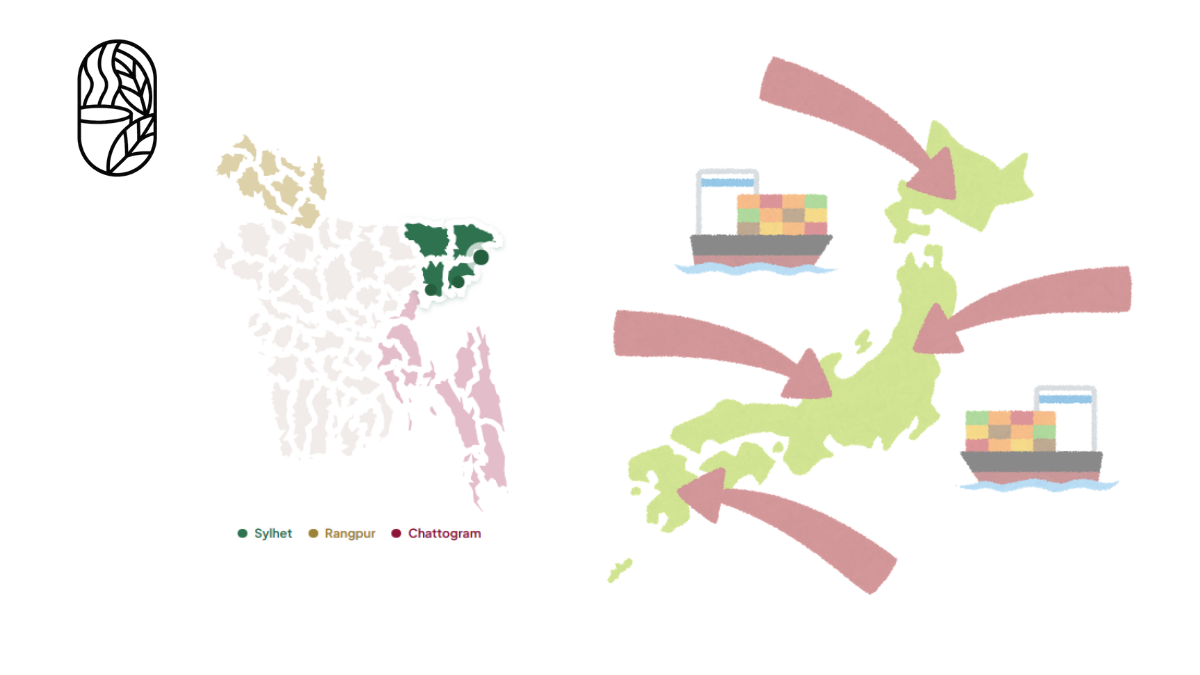
Tea Shop BD focuses on Bangladesh-origin tea. Its collection is built around tea connected with Bangladesh sources, including products associated with Sreemangal, Chattogram, Panchagarh, Lalmonirhat and other verified local suppliers or regions, depending on the product.
This guide compares Bangladesh-origin tea and imported tea in a fair, practical way. It explains what origin means, how to read labels, why freshness can differ, how pricing works and how to choose the tea that fits your cup.
Quick Answer: Bangladesh-Origin Tea vs Imported Tea
Bangladesh-origin tea is tea connected to Bangladesh gardens, producers, auction routes or verified local suppliers.
Imported tea is tea brought into Bangladesh from another country. Its origin should be clearly identified rather than implied by packaging or a foreign-style name.
Choose Bangladesh-origin tea when you want:
- Local sourcing
- Bangladesh regional identity
- Easier connection to local tea categories
- Tea suitable for familiar Bangladeshi recipes
- A product with Bangladesh-focused origin information
- The opportunity to explore Sreemangal, Chattogram, Panchagarh or northern-region tea
Imported tea may appeal to buyers who specifically want a verified foreign origin, a particular international style or a product unavailable through local sources.
Neither origin is automatically better. Compare the product information and choose based on flavour, brewing use, freshness, budget and trust.
What Does Bangladesh-Origin Tea Mean?
Bangladesh-origin tea is tea connected to a verified Bangladesh source.
That connection may involve:
- A Bangladesh tea garden
- A local processing factory
- A Sreemangal or Chattogram auction route
- A northern Bangladesh producer
- A verified regional supplier
- A local tea business selecting and packing the tea
The exact route can vary by product. A tea described as Bangladesh-origin does not necessarily mean the retail customer receives it directly from the garden gate.
Tea must be processed, transported, sorted, packed and stored before it reaches a household. A responsible product page explains the origin as clearly as the seller can verify it.
If a specific garden is not confirmed, the seller should use a regional or supplier-based description rather than inventing an estate name.

What Does Imported Tea Mean?
Imported tea is tea brought into Bangladesh from another country.
A clear imported tea label should normally help a buyer identify:
- Country of origin
- Tea type
- Ingredients
- Net weight
- Importer or seller details
- Tea Board Bangladesh Certificated
- Custom Clearance
- Storage information
- Preparation guidance
A foreign brand name, English packaging or international-looking design does not prove that the tea is imported.
Likewise, a local brand may sell Bangladesh-origin tea in premium packaging. Buyers should read the origin statement rather than judge from appearance.
Origin Is Different From Brand Location
This distinction is important.
A tea brand may be based in Bangladesh, but the tea may be:
- Bangladesh-origin
- Imported
- A blend
- A product containing tea and other ingredients
The brand’s business location does not automatically identify the leaf’s origin.
Similarly, an imported brand may pack or distribute tea through a Bangladesh business. That does not make the tea Bangladesh-origin.
Before comparing products, separate these three questions:
- Where was the tea grown?
- Where was it processed?
- Where was it packed or sold?
The product page may not provide every detail, but it should not create a false impression.
Why Bangladesh-Origin Tea Matters to Local Buyers
Bangladesh buyers often use tea in ways that reflect local routines.
Common uses include:
- Dudh cha
- Lal cha
- Family tea
- Office tea
- Tea-stall-style serving
- Plain afternoon tea
- Guest serving
- Spiced milk tea
- Iced or flavoured tea
Bangladesh-origin tea can be selected for these routines, especially when the tea type and brewing guidance are clear.
For example, CTC black tea may suit a customer who wants quick colour and strength after adding milk. A northern-origin orthodox or green tea may appeal to someone who wants more visible leaf character or a lighter plain cup.
This is not a guarantee that every local tea will taste the same. It simply shows why local origin can be relevant to local use.
Regional Bangladesh Tea Context
Sreemangal
Sreemangal is widely associated with Bangladesh tea culture and tea-growing areas. Tea connected with Sreemangal may be sourced through gardens, auction routes, producers or verified local suppliers.
The final cup can vary according to:
- CTC or orthodox processing
- Leaf grade
- Harvest batch
- Storage
- Brewing method
Do not assume all Sreemangal tea has one fixed flavour.
Chattogram
Chattogram is associated with CTC tea trade and auction activity. Chattogram-connected CTC tea may be practical for strong milk tea because of its fast extraction and bold body.
Again, product-specific information matters more than the regional label alone.
Panchagarh
Panchagarh is a northern Bangladesh tea-growing region that may be associated with selected green, orthodox, white or other tea styles.
Buyers should check the actual tea category, leaf description and brewing instructions.
Lalmonirhat and Northern Bangladesh
Lalmonirhat and other northern sources may appear in descriptions of selected local teas. The precise source, processing and batch character should be confirmed on each product page.
Freshness: Local vs Imported
Many buyers assume Bangladesh-origin tea is automatically fresher because it travels a shorter distance. Sometimes that may be possible, but freshness depends on the full supply chain.
Freshness can be affected by:
- Time between production and packing
- Storage before retail
- Packaging seal
- Exposure to air
- Humidity
- Heat
- Transport
- Warehouse conditions
- Handling after delivery
An imported tea may be carefully sealed and stored. A local tea may lose aroma if it is left open or poorly protected. The opposite can also occur.
Therefore, do not use origin alone as a freshness guarantee.
Check:
- Pack condition
- Check Bangladesh Tea Board Approved Document
- Check Vat details
- Current stock information
- Packing details where provided
- Storage instructions
- Dry-leaf aroma after opening
- Seller transparency
Taste: Does Origin Decide Everything?
No.
Tea flavour is created by several connected factors:
- Plant material
- Soil and climate
- Harvest timing
- Leaf standard
- Processing style
- Oxidation
- Drying
- Packaging
- Storage
- Water
- Brewing time
- Serving additions
Origin forms part of this chain. It does not control every part of it.
A Bangladesh-origin green tea and an imported green tea may both taste fresh and light, but their aroma and finish can differ. A Bangladesh-origin CTC tea and an imported CTC tea may both work in milk tea but provide different levels of body or briskness.
The right comparison is not “local versus foreign” in the abstract. It is product versus product.
Bangladesh-Origin Tea vs Imported Tea: Product Comparison
| Buying Factor | Bangladesh-Origin Tea | Imported Tea |
| Leaf origin | Connected to Bangladesh source | Connected to another country |
| Regional identity | May reference Sreemangal, Chattogram, Panchagarh or Lalmonirhat | Should identify foreign country or region |
| Local recipe suitability | May be selected for familiar local uses | Depends on style and product |
| Traceability | Can involve gardens, auctions or local suppliers | Can involve overseas producers, importers and distributors |
| Freshness | Depends on local processing, packing and storage | Depends on production date, import route, packing and storage |
| Price factors | Local sourcing, grade, packaging and delivery | Foreign sourcing, import costs, taxes, logistics and packaging |
| Product variation | Can vary by garden and local batch | Can vary by country, producer and batch |
| Buyer priority | Local origin and familiar tea use | Verified foreign origin or specific international style |
This table shows typical questions, not universal quality rankings.
Why Imported Tea May Cost More
Imported tea may involve additional costs such as:
- Overseas transport
- Import handling
- Duties or taxes
- Distributor margins
- Foreign packaging
- Currency changes
- Storage during transit
- Retail distribution
A higher price may be justified by a verified origin or a specific style, but it does not guarantee that the tea suits your taste.
Compare:
- Net weight
- Tea category
- Price per gram
- Ingredients
- Processing
- Pack protection
- Brewing yield
- Delivery cost
Why Bangladesh-Origin Tea May Offer Good Value
Bangladesh-origin tea can offer practical value when it matches the way you drink tea.
Value may come from:
- Suitable strength
- Familiar brewing
- Local availability
- Clear regional sourcing
- Appropriate pack sizes
- Lower dependence on overseas logistics
- Tea designed for milk tea or plain tea
- Trial options for new buyers
This does not mean every local tea is cheaper than every imported tea. Value depends on what you receive for the price.
A small Bangladesh-origin trial pack may be more useful than a large imported pack that does not match your routine.
Does “Imported Quality” Mean Imported Tea?
Not necessarily.
Some sellers use phrases such as:
- Imported quality
- International standard
- Foreign-style flavour
- Premium global taste
These phrases may describe marketing language rather than actual origin.
If the tea is Bangladesh-origin, the listing should say so clearly. A foreign-style phrase should not replace an origin statement.
Before ordering, check:
- Country or regional origin
- Tea category
- Ingredients
- Net weight
- Seller information
- Product description
- Packaging label
If the origin is unclear, ask the seller rather than guessing.
How to Check Whether a Bangladesh-Origin Claim Is Clear
A useful Bangladesh-origin product page should answer:
- Is the tea grown or sourced in Bangladesh?
- Is the region named where verified?
- Is the tea processed locally or described more generally?
- Is the tea pure or blended?
- Is the tea type clearly stated?
- Does the pack label match the online description?
- Are brewing and storage instructions included?
A clear product listing does not need to reveal confidential trade information. It does need to help the customer make a sensible choice.
Bangladesh-Origin Tea for Different Drinking Habits
For Strong Dudh Cha
Look for CTC black tea or a stronger black tea suitable for milk.
The origin may be Bangladesh-based, but body and extraction speed are the most important practical characteristics.
For Plain Black Tea
Leaf black tea or orthodox tea may be a better starting point if you want aroma and visible leaf character.
For Light Plain Tea
Green tea, white tea or selected oolong tea may suit a lighter cup.
For Tea Exploration
Tea Trial Packs can help compare local tea styles without committing to a large pack.
For Guest Serving
Choose a familiar style that is easy to prepare consistently. A local tea with clear brewing guidance can be practical.
For Gifts
Use origin, presentation, tea variety and the recipient’s taste together. Do not assume imported packaging is automatically more suitable.
Buying Bangladesh-Origin Tea Online
A safe online buying process can be simple.
Start With the Tea Style
Decide whether you want milk tea, plain tea, green tea, leaf tea or an aromatic specialty style.
Confirm Origin
Read the Bangladesh-origin statement and regional information.
Review Ingredients
For flavoured, fruit, flower or herbal products, check what has actually been included.
Check Net Weight
Do not compare total prices without comparing pack sizes.
Read Brewing Instructions
A product that needs gentle brewing should not be judged using a CTC method.
Check Storage Advice
Proper storage protects the tea after delivery.
Confirm Current Product Information
Check stock, price, variations and delivery information before ordering.
Buying Imported Tea in Bangladesh
If you choose an imported tea, use the same careful process.
Check:
- Country of origin
- Importer or seller details
- Tea Board license and approve Import document
- Tea category
- Ingredients
- Net weight
- Packing condition
- Storage advice
- Product date information where available
- Brewing guidance
- Price per gram
An imported tea should not be treated as automatically authentic simply because the design looks international.
A local product should not be dismissed simply because it is packaged by a Bangladesh business.
Common Mistakes When Comparing Local and Imported Tea
Assuming Imported Means Better
Origin alone does not guarantee quality or enjoyment.
Assuming Local Means Basic
Bangladesh-origin tea can include carefully selected green, orthodox, white, oolong, leaf black and CTC teas.
Confusing Brand Origin With Leaf Origin
A Bangladesh brand may sell imported tea, and a foreign-looking package may contain local tea.
Ignoring Processing
CTC, orthodox, green, white and oolong teas behave differently regardless of origin.
Comparing Unequal Pack Sizes
Always compare cost per gram and expected use.
Forgetting Humidity
Both local and imported tea need protection from Bangladesh’s humid conditions after delivery.
Believing Unverified Health Language
“Premium,” “local,” “natural” or “imported” does not prove a medical benefit.
Frequently Asked Questions
Is Bangladesh-origin tea better than imported tea?
Not universally. Bangladesh-origin tea can offer excellent value and local variety, while imported tea may suit buyers seeking a verified foreign style. Compare the product rather than relying on origin alone.
Is Bangladesh-origin tea fresher?
It may have a shorter local supply route, but freshness depends on processing, packing, storage, transport and handling. Origin alone is not enough to prove freshness.
Does Tea Shop BD sell imported tea?
Tea Shop BD focuses on Bangladesh-origin tea. Check each product page for the specific origin and sourcing description.
Which is better for Bangladeshi milk tea?
CTC black tea is often practical because it brews quickly and keeps its body after milk and sugar. This applies to suitable CTC products regardless of whether the source is local or imported.
Why can imported tea cost more?
Imported tea may include overseas logistics, import handling, distributor costs, packaging, taxes and currency-related expenses. Price should still be compared by net weight and tea type.
Can a Bangladesh-origin tea taste like an imported tea?
Different teas can share broad sensory characteristics, but no product should be presented as identical to another tea without evidence. Taste depends on source, processing, batch and brewing.
How do I verify tea origin online?
Read the origin statement, region, product description, label and seller information. Ask for clarification if the wording is vague or contradictory.
Should beginners start with local or imported tea?
Start with the style you already enjoy. If you want to explore several Bangladesh-origin styles, a small tea trial pack can be a practical option.
Final Thoughts
Bangladesh-origin tea and imported tea should be compared using facts, not assumptions.
Origin tells you where the tea is connected to. Processing tells you how it may brew. Packaging and storage affect freshness. Net weight and price determine value. Your own recipe and taste decide whether the tea is right for you.
Tea Shop BD customers can explore Bangladesh-origin CTC, green, orthodox, white and oolong teas, then choose a pack based on verified information and intended use.
Local tea is not automatically better, and imported tea is not automatically better. The best choice is the one that is clearly described, properly handled and suitable for the way you drink tea.