
The Right Tea Quantity Starts With Water Volume
The amount of tea you use can change the entire cup. Too little leaf may produce a thin, short finish. Too much can make the cup harsh, waste tea and make it harder to understand what the product is supposed to taste like.
In Bangladesh, the problem is often made more confusing by cup size. One household may call a 150ml teacup “one cup,” while another uses a 300ml mug. A restaurant cup, office mug and family serving pot may all be different. That is why “one spoon per cup” is only useful after you know how much water the cup actually holds.
A better system connects tea quantity to water volume. Once you know that ratio, you can scale the same tea up or down with much more consistency.
Two tea-industry references support the same general idea: the UK Tea & Infusions Association advises one rounded teaspoon of loose tea per cup, while the Tea and Herbal Association of Canada uses one teaspoon per 6 oz (about 175ml) as a general starting point. For Tea Shop BD products, grams and millilitres are more precise because leaf size varies widely.
How Much Tea Should You Use Per Cup?
For a 200ml cup, start with the following ranges and then check the current product page. These are practical starting points, not universal laws.
| Tea style | Starting quantity | Water | Useful note |
| CTC black tea | 2–3g | 200ml | For milk tea, some products use a stronger base before milk is added. |
| Leaf / orthodox black tea | 2–3g | 200ml | Do not compress large leaves into the spoon or infuser. |
| Green tea | 2–3g | 200ml | If bitter, check temperature and time before reducing leaf drastically. |
| White tea | About 3g | 200ml | Large, light leaves make weight more reliable than spoon volume. |
| Oolong tea | About 1 tsp | 235–240ml | Current Oolong guidance uses about 1 tsp per 8 oz; leaf shapes vary. |
| Fruit tea blend | 2–3g | 200ml | Large dried fruit pieces can make teaspoons misleading. |
| Yellow tea | 2–3g | 180–240ml | Current Tea Shop BD Yellow Tea guidance uses 2–3g per 6–8 oz. |
The safest principle is simple: weigh the tea when you want precision, use a consistent level spoon when convenience matters, and adjust only one variable at a time.
Why “One Teaspoon” Is Not the Same for Every Tea
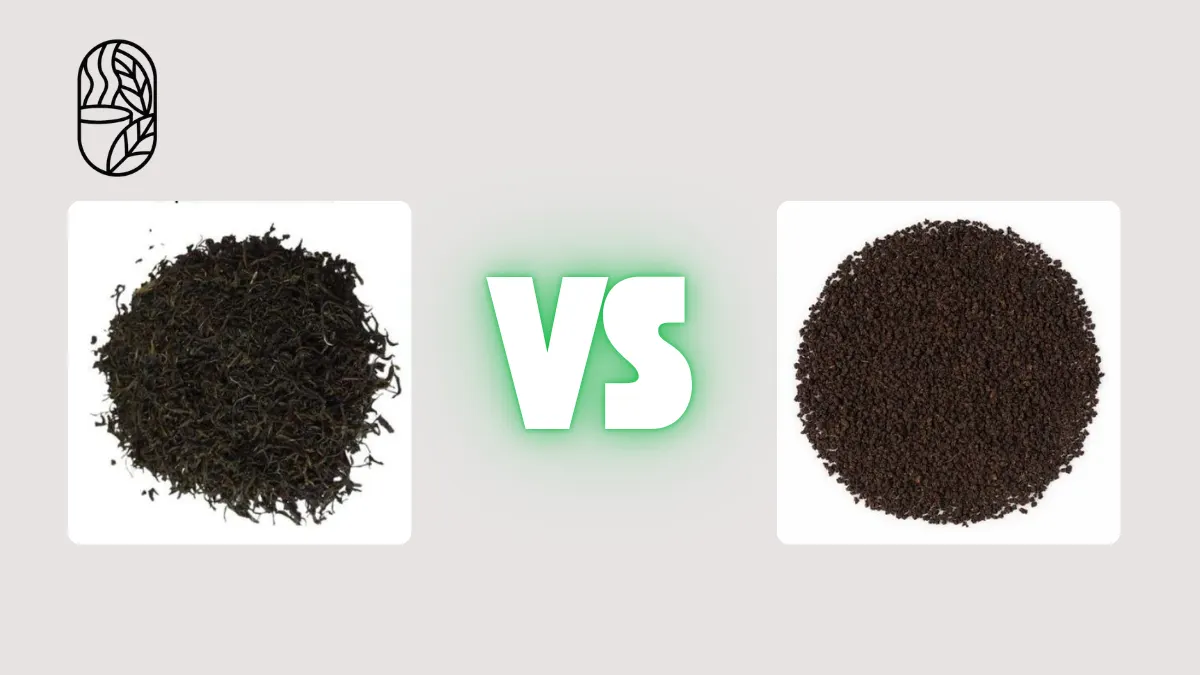
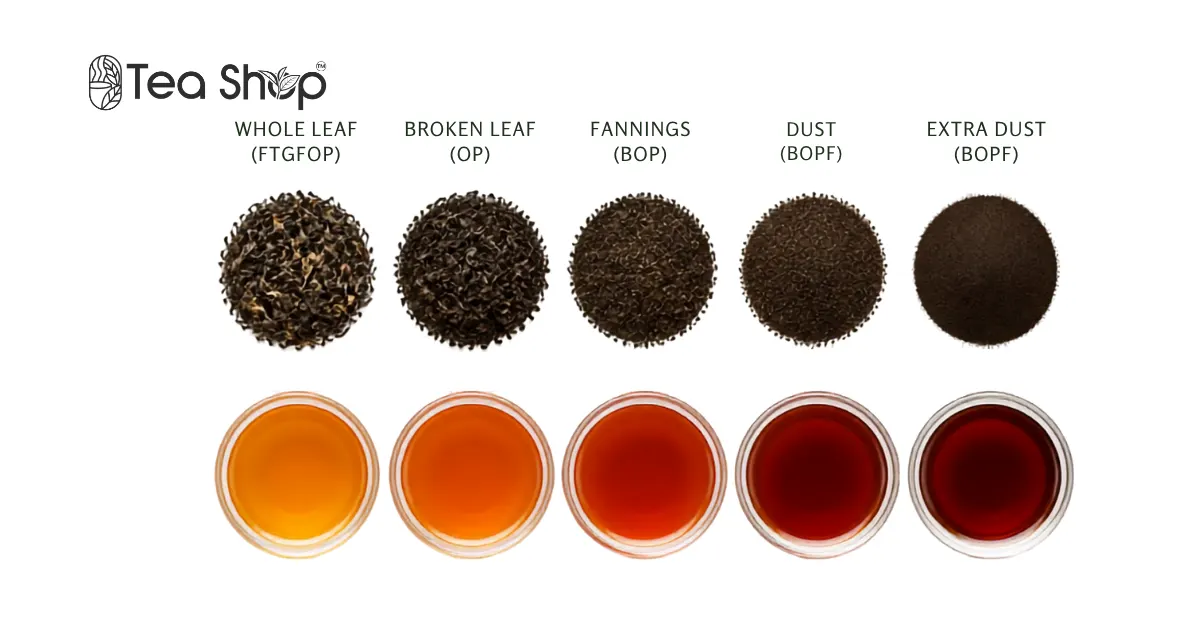
Tea is not uniform in shape. A teaspoon of compact CTC granules can weigh much more than a teaspoon filled with long orthodox leaves or fluffy white tea. A fruit blend may contain pieces of mango, citrus peel, flowers or other botanicals that take up even more space.
Volume Can Mislead
A spoon measures volume. A scale measures weight. When leaf size changes, the relationship between the two changes too.
When a Spoon Is Good Enough
A spoon works well for daily home brewing when you use the same product, the same spoon and the same cup repeatedly. Once you find a result you like, consistency matters more than laboratory precision.
When a Scale Is Better
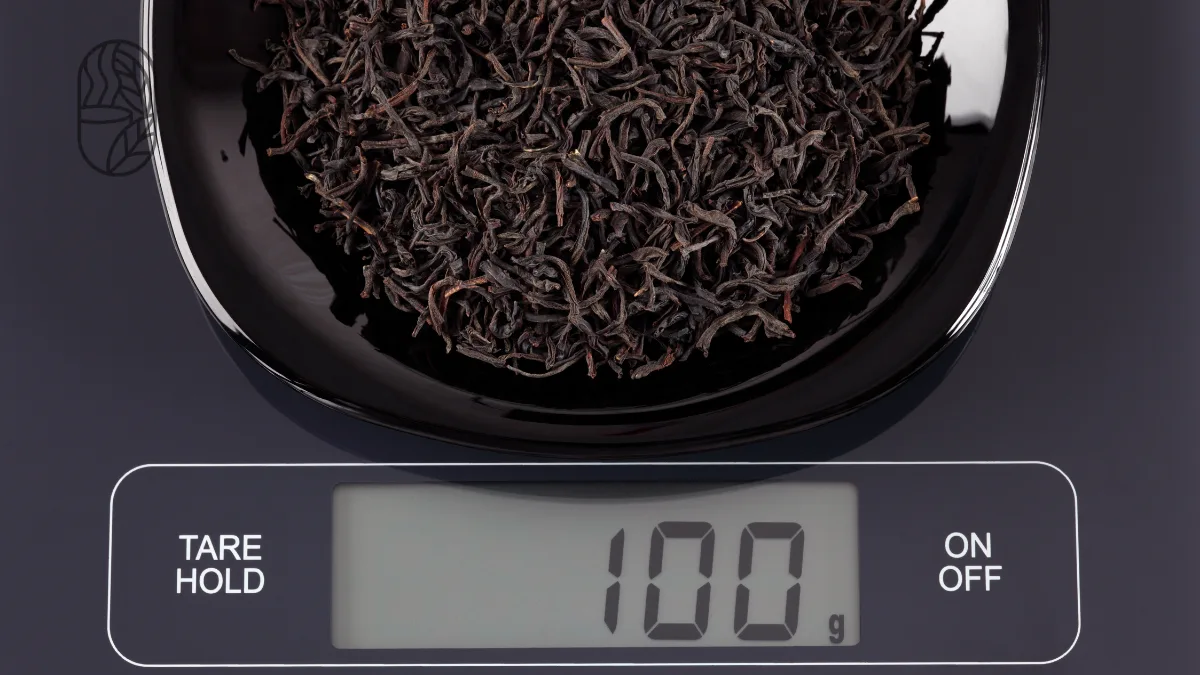
Use a small digital scale when comparing different leaf styles, calculating cost per serving, preparing tea for an office or café, or scaling a recipe. Even a basic 0.1g-resolution kitchen scale can make recipe testing much easier.
How to Measure CTC Black Tea for One Cup
CTC black tea contains small particles that extract quickly and are commonly used for strong plain tea and Bangladeshi milk tea. Tea Shop BD’s CTC Black Tea collection includes products intended for bold everyday cups and milk-tea preparation.
Starting Ratio for Plain CTC Tea
A useful starting point is 2–3g of CTC tea per 200ml of water. Tea Shop BD’s current Premium Blend Tea page uses that same quantity for a standard plain brew.
Starting Ratio for Milk Tea
Milk changes the balance, so the tea base may need to be stronger. The current Premium Blend Tea brewing note uses 3–4g in 150ml water before warm milk and sugar are added. Treat that as product-specific guidance rather than a universal dudh-cha formula.
If Your CTC Tea Is Too Weak
Before adding a large extra spoonful, check cup size, milk quantity, water volume and steeping time. A 300ml mug made with a ratio intended for 150–200ml will naturally taste weaker.
If Your CTC Tea Is Too Harsh
Reduce the leaf slightly or shorten the extraction. Do not change tea quantity, time and water volume at the same time, because you will not know which adjustment improved the cup.
How to Measure Leaf Black and Orthodox Tea
Visible rolled or twisted leaves take up more physical space than CTC particles. Tea Shop BD’s Leaf Orthodox Tea currently recommends 2–3g per 200ml, which is a practical starting point for many leaf-led black teas.
Give Large Leaves Room to Open
Do not pack a small infuser tightly. The leaves need water contact and space to unfurl. A bigger basket or roomy mug often gives better control than increasing the leaf amount in a cramped tea ball.
Do Not Judge by Spoon Height
A rounded spoon of long leaves may look generous but weigh less than a compact spoon of CTC. If you are switching between tea types, weigh the first few servings until you learn what the correct amount looks like.
For a Stronger Cup
Increase the leaf in small steps—perhaps 0.5g at a time—before extending the brewing time dramatically. Small changes are easier to evaluate.
How Much Green Tea Should You Use?
Green tea is sensitive to more than quantity. Water temperature and steeping time can change bitterness and astringency quickly. Tea Shop BD’s Green Tea collection contains several loose-leaf styles; the current Sencha Green Tea page recommends 2–3g per 200ml.
A Reliable Starting Point
Start around 2–3g per 200ml and follow the specific temperature and time on the product page. If the cup tastes bitter, do not automatically assume that you used too much tea.
Check These Before Changing the Quantity
- Was the water too hot for the product?
- Was the tea left steeping too long?
- Was the cup smaller than 200ml?
- Did the leaves remain in the mug while you drank?
Correcting those variables may solve the problem without changing the amount of tea at all.
How Much White Tea Should You Use?
White tea is an excellent example of why teaspoons can be misleading. Its leaves may be large, airy and lightweight, so a full-looking spoon may contain relatively little tea by weight.
Tea Shop BD’s current White Tea guidance uses about 3g per 200ml of water.
Why Weight Works Better for White Tea
If you measure by volume alone, different leaves can produce very different amounts. For the first few brews, weigh 3g and look at how much space that quantity occupies in your usual spoon or infuser. After that, you can often estimate more confidently.
When White Tea Tastes Too Light
Do not assume that light colour means weak tea. Evaluate aroma, body and finish first. If the cup genuinely lacks presence, increase the leaf gradually rather than over-steeping it.
How Much Oolong Tea Should You Use?
Oolong leaf shapes vary widely, which makes one universal gram rule difficult. Tea Shop BD’s current Oolong Tea page uses approximately one teaspoon per 8 ounces of water, roughly 235–240ml.
For Repeated Infusions
If you plan to re-steep the leaves, keep the ratio consistent first and change steeping time between infusions. Do not keep adding extra dry leaf to compensate for a later, lighter infusion.
Use a Spacious Infuser
Rolled oolong can expand significantly. Give the leaves room to open so the measured amount can brew evenly.
How Much Fruit Tea Should You Use?
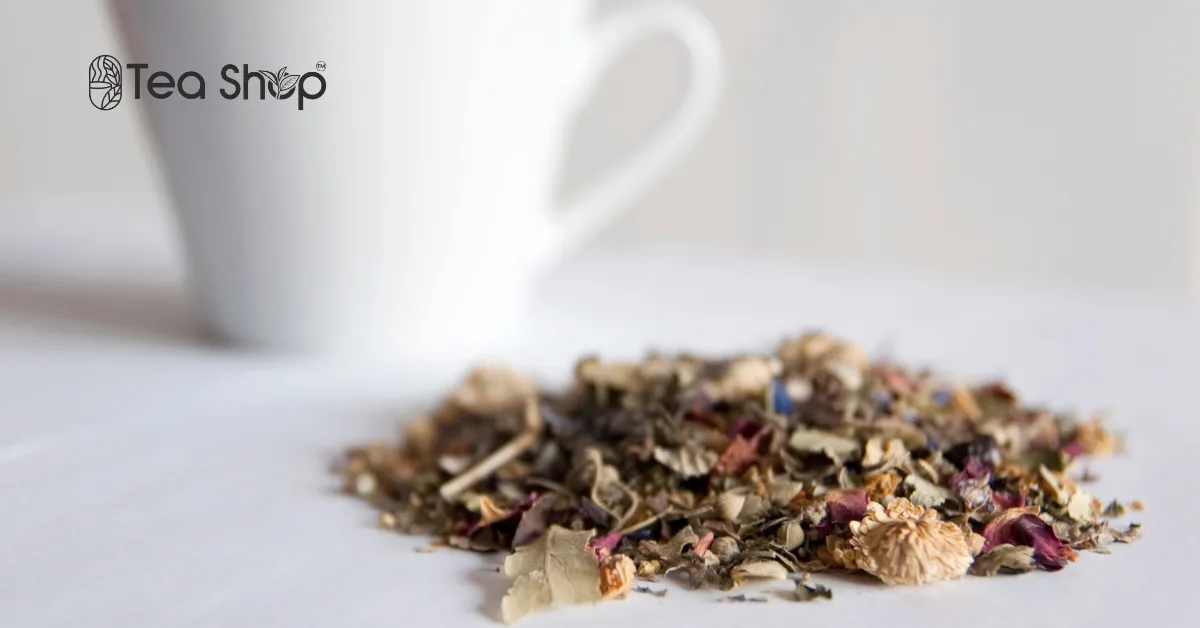
Fruit tea measurement depends strongly on ingredient size. A blend may contain tea leaves, fruit pieces, citrus peel, flowers or botanicals. Those components do not pack into a teaspoon evenly.
Tea Shop BD Golden Bloom Fruit Tea currently recommends 2–3g per 200ml, making that a sensible starting point for that specific blend.
Why Fruit Tea Can Look Like “More” Tea
A 3g portion containing dried fruit may occupy much more space than 3g of CTC. That does not mean the fruit tea is stronger. Judge the final infusion and follow the blend-specific guidance.
For Iced Fruit Tea
Ice dilutes the drink as it melts. Brew a small test batch, chill or pour over ice, then taste again. If the finished drink is too weak, increase the dry tea or reduce the brewing water slightly on the next batch rather than simply over-steeping.
How Cup Size Changes the Amount of Tea You Need
Once you have a working ratio, scaling is simple. If your tea uses 2.5g per 200ml, larger cups need proportionally more tea.
| Water volume | Tea at 2.5g / 200ml | Practical use |
| 150ml | About 1.9g | Small teacup |
| 200ml | 2.5g | Reference cup |
| 250ml | About 3.1g | Medium mug |
| 300ml | About 3.8g | Large mug |
| 500ml | About 6.3g | Small sharing pot |
| 1 litre | 12.5g | Large batch / office test |
These figures are mathematical scaling examples, not product instructions. If a product page says 3g per 200ml, use 3g—not 2.5g—as your base.
A Simple Formula for Any Tea-to-Water Ratio
| Tea needed (g) = target water volume (ml) × reference tea quantity (g) ÷ reference water volume (ml) |
Example: a tea recommends 3g per 200ml, and your mug holds 300ml.
300 × 3 ÷ 200 = 4.5g
So approximately 4.5g is the proportional starting amount for that mug.
This is especially useful for offices, family pots and cafés because staff can scale the same recipe without guessing.
Spoon Measurement vs Weight: Which Should You Use?
| Method | Best for | Main advantage | Main limitation |
| Level teaspoon | Daily home brewing | Fast and convenient | Different leaf shapes weigh differently |
| Rounded teaspoon | Following a recipe that specifies it | Easy to repeat with the same tea | “Rounded” varies between people |
| Digital scale | Testing, cafés, offices, cost calculations | Most consistent across tea types | Requires a scale |
| Visual estimation | Experienced repeat use | Fastest once learned | Poor for comparing new teas |
Best Practice for a New Product
- Read the current product brewing guidance.
- Weigh the first serving if a gram amount is provided.
- Use the same cup and water volume.
- Record the result you like.
- Only then convert the weight into your usual spoon measure if you want faster daily brewing.
How to Adjust Tea Quantity for Milk Tea
Milk can reduce the perceived strength of the tea base. That is why a ratio that tastes balanced as plain black tea may disappear after milk is added.
Measure the Whole Recipe, Not Just the Dry Tea
Record water, tea, milk and sugar separately. If you only write “one spoon of tea,” different people can still produce different cups because the milk and water may change.
For Dudh Cha
Use a CTC product intended for strong extraction and follow its current guidance. Build the recipe around the total liquid volume rather than the size of the final cup alone, because water may evaporate during simmering.
For Office Milk Tea
Write the recipe near the preparation area. A standard scoop or scale prevents one staff member from making a very strong batch and another from making a weak one.
How to Scale From One Cup to a Family Pot
Mathematically, multiplying the ratio is straightforward. In practice, large batches can extract differently because the water stays hot longer, leaves move differently and straining may take more time.
Use Proportional Scaling First
If one 200ml cup uses 2.5g, start a 1-litre pot at 12.5g. Brew, taste and then record the final quantity that works for your vessel.
Do Not Keep the Leaves in the Pot Indefinitely
Once the target extraction is reached, strain the tea. A large pot left sitting on the leaves can continue getting stronger even if the original ratio was correct.
How Much Tea Should an Office Use?
For office planning, measurement has two jobs: keeping the cup consistent and controlling cost.
Create a Standard Office Recipe
Choose one reference serving—for example, 200ml—and record the grams of tea, water, milk and sugar. Scale from that recipe for five, ten or twenty servings.
Track Real Consumption
If 20 cups are prepared daily at 2.5g per cup, the office uses about 50g of tea per day before accounting for wastage. That means a 1kg pack represents roughly 20 working days at that consumption level.
Connect Measurement to Pack Size
Accurate serving measurements make it easier to choose pack size because you can estimate how many cups the pack can produce. Browse the Tea Shop BD online shop to compare current pack variations and product-specific brewing guidance.
How Measurement Affects Cost Per Cup
Tea quantity is not only a brewing variable. It also determines how quickly a pack is used.
| Pack size | At 2g per cup | At 2.5g per cup | At 3g per cup |
| 100g | 50 cups | 40 cups | About 33 cups |
| 250g | 125 cups | 100 cups | About 83 cups |
| 500g | 250 cups | 200 cups | About 167 cups |
| 1kg | 500 cups | 400 cups | About 333 cups |
These are dry-tea yield estimates only. Spillage, testing, stronger recipes and milk-tea preparation can change the real number.
Signs You May Be Using Too Much Tea
The Cup Gets Harsh Very Quickly
A high leaf-to-water ratio can make extraction feel aggressive, especially with fine particles.
You Need a Lot of Sugar to Make It Drinkable
Sugar may be masking an over-strong base. Test a lower quantity or shorter steep before changing the sweetener.
The Tea Feels Heavy but Not More Aromatic
More leaf does not always create more complexity. It can simply make the cup denser and less balanced.
Signs You May Be Using Too Little Tea
The Aroma Is Barely Noticeable
If temperature and time are correct, the ratio may be too low for the cup size.
Milk Completely Covers the Tea
For milk tea, the base may need more tea or less milk.
The Finish Disappears Immediately
A watery cup can result from using a measurement intended for a smaller volume of water.
Common Tea Measurement Mistakes
| Mistake | Why it causes problems | Better approach |
| Using the same spoon for every tea | Different leaf shapes have different weights | Use grams when switching tea styles |
| Ignoring cup size | A 300ml mug dilutes a 200ml recipe | Measure the actual mug volume once |
| Packing leaves into the spoon | Compression changes the amount | Use a level, loose-filled spoon |
| Changing leaf and time together | You cannot identify the useful change | Adjust one variable at a time |
| Judging strength only by colour | Dark colour does not equal balanced extraction | Taste aroma, body and finish |
| Ignoring milk volume | Milk can hide a correctly brewed but light base | Measure the whole recipe |
A 60-Second Measurement Routine
1. Check the current Tea Shop BD product page for the recommended quantity.
2. Measure the real water volume of your cup or mug.
3. Use grams when possible; otherwise use one consistent level or rounded spoon as directed.
4. Keep temperature and steeping time appropriate for that tea.
5. Taste before adding milk or sugar when practical.
6. Change only one variable for the next cup.
7. Write down the ratio once you find a result you like.
Frequently Asked Questions
How many grams of tea should I use for one cup?
For many Tea Shop BD loose teas, 2–3g per 200ml is a useful starting range. White Tea currently uses about 3g per 200ml. The product-specific brewing instructions should always take priority because leaf size, processing and intended preparation differ.
How much CTC tea should I use for one cup?
For plain CTC black tea, start around 2–3g per 200ml. For milk tea, some Tea Shop BD products use a stronger base; Premium Blend Tea currently gives a 3–4g per 150ml water brewing note before milk and sugar. Adjust the full recipe rather than only the dry tea.
Is one teaspoon of loose tea enough for a mug?
Sometimes, but the answer depends on the mug and tea. A 175–200ml cup is different from a 300ml mug, and one teaspoon of CTC weighs differently from one teaspoon of large white tea leaves. Measure your mug once and use grams when you need accuracy.
How much green tea should I use for 200ml?
Tea Shop BD’s current Sencha guidance uses 2–3g per 200ml. If the tea tastes bitter, check water temperature and steeping time before assuming that the leaf amount is wrong.
How much white tea should I use?
Tea Shop BD’s current White Tea page recommends about 3g per 200ml. Because white tea leaves can be large and light, weighing them is more reliable than judging by spoon volume.
Should I use more leaf tea than CTC tea?
Not automatically. Larger leaves occupy more space, but that does not mean they need a larger weight. Current Tea Shop BD Leaf Orthodox guidance uses 2–3g per 200ml, which is similar in weight to several other loose tea styles.
How do I scale tea from one cup to a pot?
Multiply the ratio by water volume. If 2.5g works for 200ml, a 1-litre pot starts at 12.5g. Test the larger batch because vessel shape, heat retention and straining time can change extraction.
How can an office keep tea measurements consistent?
Use one labelled scoop or a small scale, define a standard cup volume, and write the full recipe with tea, water, milk and sugar. This improves consistency and makes pack-size and cost-per-cup calculations much easier.
Final Thoughts
The best answer to “how much tea should you use per cup?” is not one universal spoonful. It is a repeatable ratio between tea and water.
For many Tea Shop BD loose teas, 2–3g per 200ml is a practical starting point. Some products differ: White Tea currently uses about 3g per 200ml, Oolong guidance uses approximately one teaspoon per 8 ounces, and milk-tea recipes may intentionally use a stronger black-tea base.
Measure the cup, check the product instructions, and change only one brewing variable at a time. Once you find the balance you enjoy, record it. That simple habit improves flavour, reduces waste and makes every cup easier to reproduce—at home, in an office or in a larger serving pot.