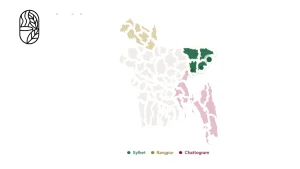
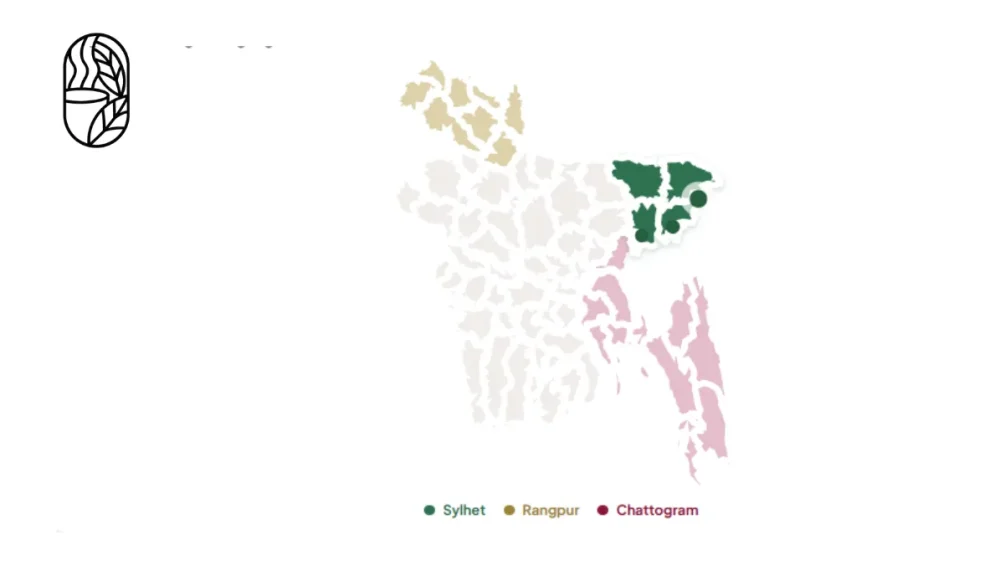
Buying tea becomes easier when you understand where the tea comes from.
Many online tea listings mention a region, auction route, garden, producer or supplier. For a new buyer, these details can feel confusing. Does “Sreemangal tea” mean the tea was grown in one specific garden? Does “Panchagarh tea” describe the garden, the district or the seller’s sourcing area? Is the tea grown in Bangladesh but packed somewhere else?
These are useful questions because origin is one of the first details that helps you evaluate a tea. However, origin is not the same as quality, tea type, processing method or freshness.
A tea can be Bangladesh-origin and still taste very different depending on whether it is CTC, orthodox, green, white or oolong tea. The same region may also produce different batches with different leaf grades and cup profiles.
Tea Shop BD focuses on Bangladesh-origin tea. This guide explains how new buyers can read origin information, understand regional references and compare products without relying on vague marketing words.
Quick Answer: How to Understand Bangladesh Tea Origin
When reading a tea product page, separate these five details:
- Where the tea was grown or sourced
- Where it was processed
- How it was transported or traded
- Where it was packed
- What tea type and grade it is
A reliable product listing should make these points clear wherever the information is available.
For Bangladesh-origin tea, you may see references to:
- Sreemangal
- Chattogram
- Panchagarh
- Lalmonirhat
- Other verified local tea-growing areas
- Auction-linked sources
- Direct garden or producer supply
- Local tea suppliers and processors
Do not assume that a regional name guarantees a particular flavour. Use origin as one part of your buying decision, then check the tea category, processing, net weight, brewing instructions, storage advice and freshness information.
What Does Tea Origin Mean?
Tea origin describes the geographical connection of the tea.
In simple terms, it answers the question: Where is this tea from?
But “from” can refer to more than one stage.
A tea may have:
- A growing origin
- A processing origin
- A trading or auction origin
- A packing origin
- A seller or brand origin
These are not always identical.
For example, tea leaves may be grown in one Bangladesh district, processed at a local facility, traded through an auction route and packed by a retailer in another city.
That does not automatically make the product misleading. The important issue is whether the product page explains the relevant information accurately.
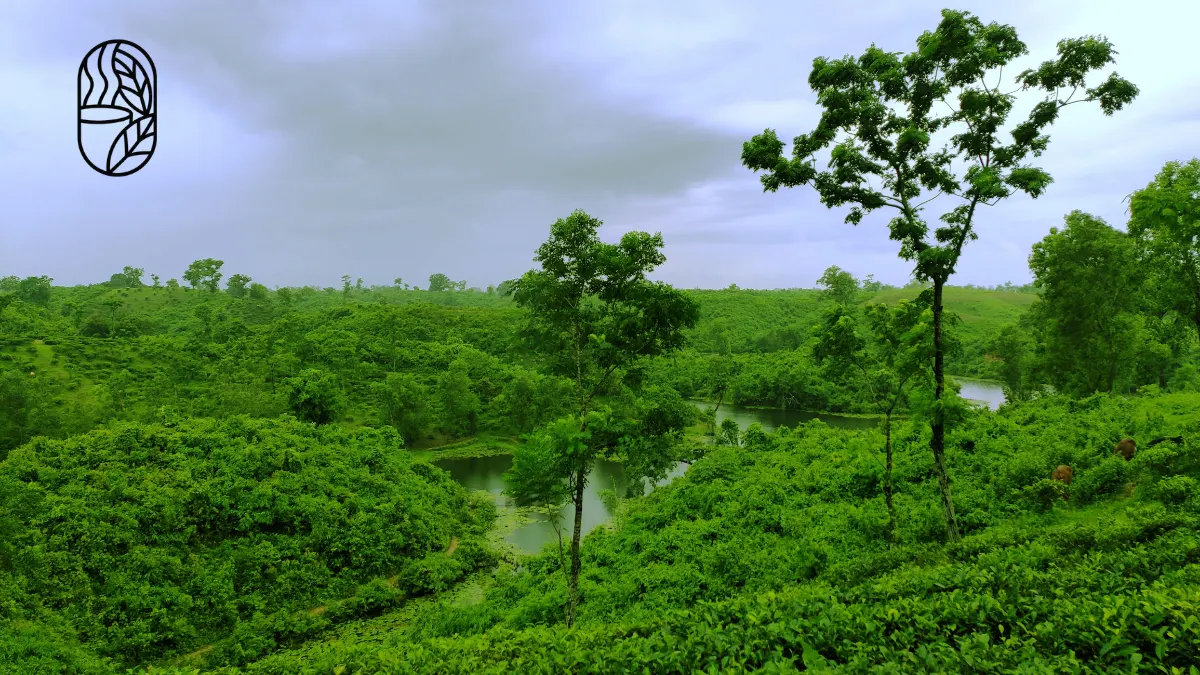
The Difference Between Garden Origin and Regional Origin
Garden-Level Origin
Garden-level origin identifies a specific tea garden or estate.
This is the most detailed form of origin information when it is verified and consistently documented. A garden-origin product may mention the estate name, area, season or processing style.
However, garden-level details should not be invented. If a seller cannot verify a specific garden, the listing should not present one as fact.
Regional Origin
Regional origin identifies a broader area, district or tea-growing zone.
Examples may include:
- Sreemangal-area tea
- Chattogram-origin CTC tea
- Panchagarh tea
- Lalmonirhat tea
- Northern Bangladesh tea
Regional origin can be useful for new buyers because it gives geographical context. It may not identify one garden or one batch.
Supplier or Producer Origin
Some products are sourced through a verified local supplier, producer or processor. In that case, the product page may describe the supplier route rather than naming a single garden.
This information can still be valuable if the tea category, source and handling details are clear.
Blended Local Origin
A tea may contain leaves from more than one Bangladesh-origin source. If so, a broad local or Bangladesh-origin description may be more accurate than naming one garden.
The buyer should check whether the product is single-source or blended.
Bangladesh Tea Regions New Buyers May See
Bangladesh tea is associated with several producing areas and trade routes. Product availability and sourcing can change, so always confirm the exact listing before ordering.
Sreemangal
Sreemangal is widely recognised as a major tea centre in Bangladesh. Product descriptions may connect Sreemangal with tea gardens, local trade, processing or auction-linked sourcing.
A Sreemangal reference does not automatically mean the tea is one specific style. Depending on the product, it may be black tea, CTC tea, orthodox tea or another category.
Chattogram
Chattogram may appear in descriptions of CTC tea, auction activity, tea trade and regional sourcing.
Because CTC tea is often chosen for strength and milk tea, Chattogram-linked products may appeal to buyers who want a bold everyday cup. Still, the actual tea type and grade must be checked on the product page.
Panchagarh
Panchagarh is a northern tea-growing area that may be associated with green, orthodox, white or other specialty-style local teas, depending on the batch and supplier.
A Panchagarh reference can help buyers understand the tea’s regional connection, but it does not replace information about processing or brewing.
Lalmonirhat
Lalmonirhat and nearby northern areas may appear in listings for locally sourced leaf teas and specialty batches.
If you see a Lalmonirhat origin reference, check whether it describes the growing area, the supplier, the processing location or a broader northern-region source.
Other Verified Local Sources
Bangladesh has additional tea-growing and supply areas. A product page may mention another district, garden, producer or verified local route.
If the source is unfamiliar, look for a clear explanation rather than judging the tea by the place name alone.
Origin Does Not Tell You the Tea Type
One of the most common beginner mistakes is treating origin and tea type as the same thing.
They are different.
Origin tells you where the tea is connected to. Tea type tells you how the tea is categorised and usually how it was processed.
A product may be:
- Bangladesh-origin CTC Black Tea
- Bangladesh-origin Orthodox Tea
- Bangladesh-origin Green Tea
- Bangladesh-origin White Tea
- Bangladesh-origin Oolong Tea
- Bangladesh-origin Leaf Black Tea
- A Bangladesh-origin blend
The region alone cannot tell you whether the tea is suitable for milk, plain brewing or repeat infusions.
Always read both fields.
Origin, Processing and Grade: Three Different Details
Origin
Where the tea was grown or sourced.
Processing
How the leaf was handled after harvesting.
Examples include orthodox processing, CTC processing, green-tea processing or oolong-style processing.
Grade
The size, appearance or classification of the processed tea.
Grade may affect extraction, aroma, body and price, but it is not a complete quality guarantee.
A tea with a clear origin but unclear processing may still be difficult to evaluate. A tea with a detailed grade description but no origin information gives you incomplete sourcing context.
The strongest product pages explain all three as clearly as possible.
Why Origin Alone Cannot Prove Quality
Tea is an agricultural product. Its final cup depends on many variables.
These may include:
- Plant material
- Harvest timing
- Weather
- Leaf condition
- Processing control
- Sorting
- Storage
- Packaging
- Water quality
- Brewing method
Two teas from the same region may taste different because they come from different gardens, seasons, grades or processing methods.
Likewise, two teas from different regions may share similar cup characteristics if they are processed for the same purpose.
Use origin as a guide, not as a guarantee.
How to Read an Online Tea Origin Label
Before adding a tea to your cart, follow this order.
Step 1: Find the Exact Tea Name
Do not rely only on words such as “special,” “classic” or “premium.”
Look for the actual category:
- CTC Black Tea
- Orthodox Tea
- Green Tea
- White Tea
- Oolong Tea
- Leaf Black Tea
- Flavoured or blended tea
Step 2: Check the Origin Statement
Look for “Bangladesh-origin,” a named district, a garden reference or a verified sourcing description.
If the wording is broad, treat it as regional information rather than a garden-level claim.
Step 3: Identify the Source Type
Ask whether the tea is described as:
- Garden-sourced
- Auction-sourced
- Direct from a producer
- Purchased through a verified supplier
- A blend of local sources
The source route can help you understand why a product may have a particular price or availability.
Step 4: Check Processing Details
A regional name is not enough. Confirm whether the tea is CTC, orthodox, green, white, oolong or another style.
Step 5: Review Net Weight and Pack Size
Origin does not tell you whether a pack is good value. Compare price per gram and expected use.
Step 6: Read Brewing and Storage Guidance
A clear origin label is useful, but the tea still needs correct brewing and proper storage after delivery.
What Does “Packed in Bangladesh” Mean?
“Packed in Bangladesh” does not always mean the tea was grown in the same place.
The tea may have been:
- Grown in Bangladesh
- Processed in Bangladesh
- Transported to a packing facility
- Sealed and labelled locally
A responsible listing should distinguish between growing origin and packing location when the difference matters.
For buyers who specifically want Bangladesh-grown tea, look for a clear Bangladesh-origin statement, not only a packing statement.
What Does “Bangladesh-Origin” Usually Tell You?
A Bangladesh-origin statement indicates that the tea is connected to Bangladesh as a source.
It may refer to tea grown locally or sourced through local tea production and supply channels. The exact level of detail depends on the product and supplier.
The statement should be supported by practical information such as:
- Tea category
- Source or region
- Net weight
- Ingredients
- Processing description
- Brewing instructions
- Storage advice
A clear listing helps you understand what is known and what is not specified.
How to Compare Two Bangladesh-Origin Teas
Suppose you are comparing two local teas online. Use a simple comparison framework.
| Question | Tea A | Tea B |
| What is the tea type? | Check listing | Check listing |
| What is the stated origin? | Garden or region | Garden or region |
| How is it processed? | CTC, orthodox or other | CTC, orthodox or other |
| What is the net weight? | Compare grams | Compare grams |
| Is it for milk or plain tea? | Follow guidance | Follow guidance |
| What storage is required? | Airtight and dry | Airtight and dry |
| Is the price clear? | Calculate per gram | Calculate per gram |
This approach prevents you from choosing only because one regional name sounds more familiar.
Choose Origin According to Your Drinking Routine
For Everyday Milk Tea
Start with a Bangladesh-origin CTC Black Tea or strong black tea. Check whether the product description specifically indicates milk-tea suitability.
For Plain Black Tea
Look at Leaf Black Tea or Orthodox Tea. A clear regional or garden reference can make the tasting experience more interesting.
For Lighter Tea
Green Tea, White Tea or Oolong Tea may be better choices. Brewing instructions matter especially because delicate teas can become bitter when over-steeped.
For Tasting Several Regions
Choose a Tea Trial Pack if available. A trial format lets you compare styles and sourcing descriptions before buying a larger pack.
For Gifts
Choose a product with clear origin, attractive but protective packaging and a tea style the recipient is likely to drink.
Origin and Price: What Should You Expect?
Origin can influence price, but it does not determine price by itself.
Retail price may also reflect:
- Tea grade
- Processing method
- Batch size
- Packaging
- Storage
- Sourcing route
- Handling
- Delivery
- Net weight
A named garden or limited batch may cost more because it requires separate sourcing or handling. A regional CTC tea may offer strong everyday value.
Compare price per gram rather than total pack price.
Price per gram = Pack price ÷ Net weight
Do not pay a premium simply because a place name appears in large letters on the package.
Common Origin Mistakes New Buyers Make
Assuming a Region Means One Flavour
Regional names provide context, not a guaranteed taste profile.
Confusing Packing Location with Growing Location
A tea packed in Bangladesh may still need a separate growing-origin statement.
Ignoring Processing
Sreemangal CTC and Sreemangal orthodox tea will not brew in the same way.
Treating “Single Origin” as Automatic Proof of Quality
Single-origin wording is useful only when the source is clear and verifiable.
Choosing by Famous Place Name Alone
A familiar tea region does not remove the need to check freshness, grade and storage.
Buying a Large Pack Before Testing
Start with a smaller quantity when the origin or tea style is new to you.
A Beginner’s Bangladesh Tea Origin Checklist
Before ordering, confirm:
- Bangladesh-origin statement
- Growing region or garden, if provided
- Processing style
- Tea category
- Grade or leaf description
- Ingredients
- Net weight
- Pack size
- Brewing method
- Storage advice
- Current price
- Delivery information
- Seller or brand details
If the page leaves major questions unanswered, choose a clearer listing or contact the seller before purchasing.
Frequently Asked Questions
What is the best Bangladesh tea origin for beginners?
There is no single best origin for everyone. Beginners should start with a clearly labelled tea that matches their routine. For milk tea, choose a Bangladesh-origin CTC tea. For plain tea, consider Leaf Black Tea, Green Tea or Orthodox Tea.
Is Sreemangal tea always better than tea from other regions?
No. Sreemangal is an important tea area, but quality depends on the specific garden, batch, processing, freshness and storage. Tea from Panchagarh, Lalmonirhat, Chattogram or another verified source may suit your taste just as well.
Does a regional name identify one tea garden?
Not necessarily. A regional name may describe a district, tea-growing zone, auction route or supplier area. Check the product page to see whether a specific garden is actually named.
What is the difference between Bangladesh-origin and packed in Bangladesh?
Bangladesh-origin refers to the tea’s sourcing or growing connection. Packed in Bangladesh refers to where the product was sealed or packaged. These can be different locations.
Can Bangladesh-origin tea be blended?
Yes. A product may combine tea from more than one local source. If the tea is blended, the listing should describe it accurately instead of presenting it as a single garden batch.
How can I verify tea origin online?
Look for a clear origin statement, regional or garden information, processing details, seller transparency and consistent product descriptions. If the claim is unclear, ask the seller before ordering.
Does origin affect tea taste?
Origin can influence growing conditions and raw material, but processing, grade, freshness, water and brewing also affect the cup. Origin should be considered together with these factors.
Should I buy a large pack of a new-origin tea?
Usually, start with a small or trial pack. Buy a larger pack only after you know that the tea suits your taste and that you can store it in Bangladesh’s humid climate.
Explore Tea Shop BD Collections
- CTC Black Tea Collection
- Green Tea Collection
- Orthodox Tea Collection
- White Tea Collection
- Oolong Tea Collection
- Tea Trial Packs
- Shop All Tea
Final Thoughts
A tea origin label is useful when you know how to read it.
Start by separating growing origin, processing location, trade route and packing location. Then check the tea type, grade, freshness, brewing method and storage advice.
For new Bangladesh buyers, the safest approach is simple: choose a clearly labelled Bangladesh-origin tea, begin with a small pack and judge the product by the complete information—not by a famous place name alone.